

Category: Guides

Retro Authorization: Which Payers Grant It and What Documentation They Require
Retro authorization is payer approval you request after a service is already done. Most Medicaid programs, Medicaid managed care,...

Structuring patient payment plans without increasing your bad debt
A payment plan only helps if it finishes. Take 20 to 25 percent down, size the installment to the...

Renegotiating payer contracts: what your current fee schedule data needs to say first
Most practices walk into a rate conversation with a number the payer already knows is wrong. Before you ask...

CCM and RPM Billing: What Time-Tracking Documentation Audits Actually Check
CCM and RPM audits don’t check whether you delivered care. They check whether your time logs prove it in...
No Surprises Act Compliance: What Your Good Faith Estimate Process Is Actually Missing
The good faith estimate rule has been enforced since 2022, but most practices still run it as a price...
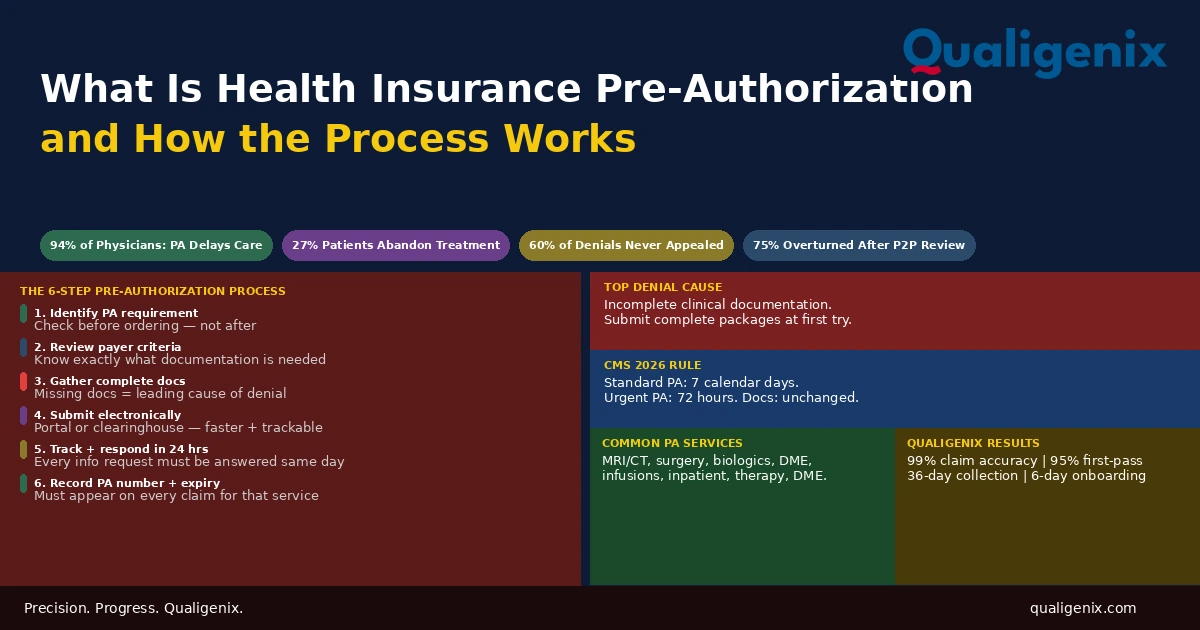
What Is Health Insurance Pre-Authorization and How It Works
Health insurance pre-authorization is the approval step that sits between a physician’s clinical decision and a patient’s access to...

Outpatient Coding for High-Volume Practices: Keeping Accuracy at Scale
Outpatient coding accuracy is manageable when a physician sees 10 patients a day. It degrades predictably when they see...

Medicare Physician Fee Schedule 2026: What Every Practice Must Know
The 2026 Medicare Physician Fee Schedule (CMS-1832-F) introduces two separate conversion factors for the first time: $33.57 for qualifying...
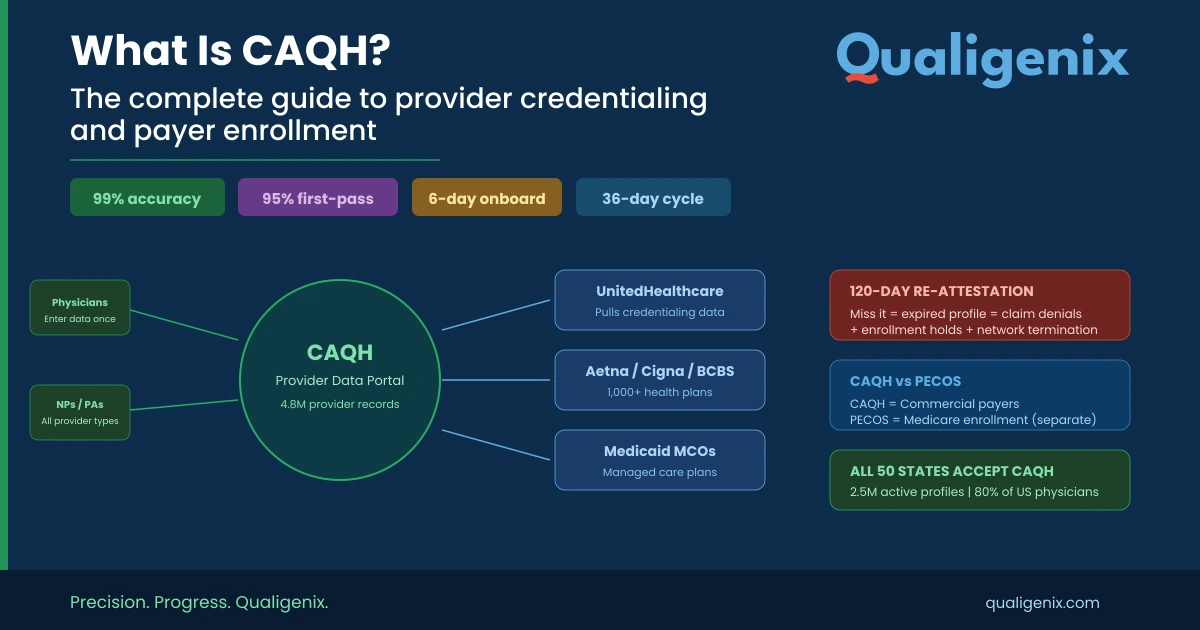
What Is CAQH? The Complete Guide to Provider Credentialing, ProView Setup, and Payer Enrollment
CAQH (Council for Affordable Quality Healthcare) is the centralized credentialing database used by 1,000+ U.S. health plans. Providers register...