

What is the Provider Enrollment Process? Step-by-Step Guide
The Qualigenix Editorial Team consists of certified billing and coding experts with over 40 years of experience across 38+ medical specialties. Our content is rigorously researched against CMS, AMA, and payer-specific guidelines to ensure total compliance and accuracy. We apply the same elite standards to our resources as we do our client work, consistently delivering high claim accuracy and significant reductions in AR days.

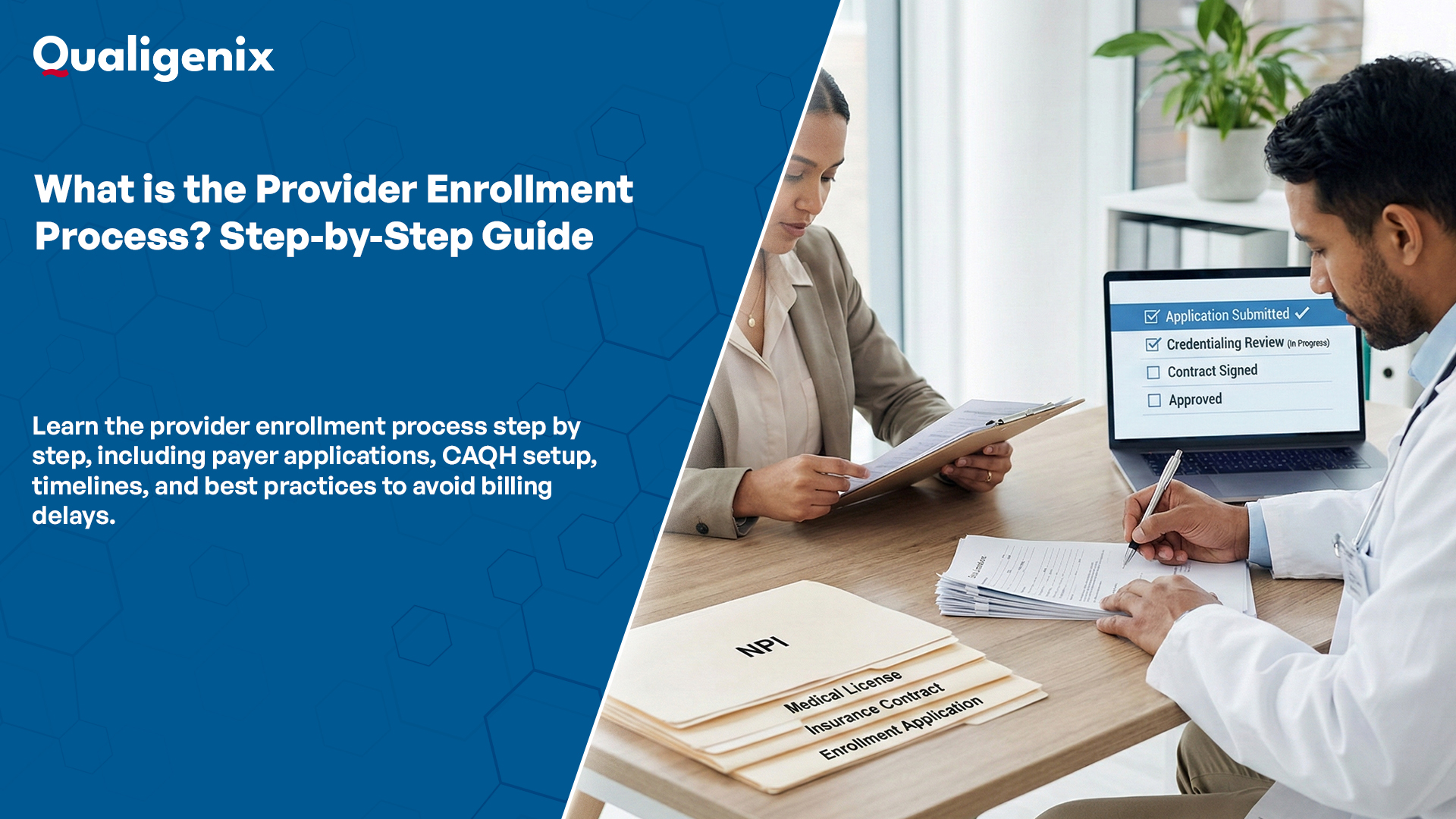
Ever wonder why claims sit unpaid even after credentialing is complete? In many cases, the real bottleneck is the provider enrollment process. Without proper enrollment, your clinic may be in the network on paper but still blocked from submitting billable claims. That means delayed reimbursements, rejected submissions, and cash flow that never quite stabilizes.
Provider enrollment is not just a compliance step. It is a revenue-critical gatekeeper that decides when your organization can officially bill payers and get paid. This step-by-step guide breaks down what happens after credentialing, where enrollment slowdowns usually occur, and how to move through the process faster. If your goal is clean claim acceptance and predictable payments, this walkthrough will keep you on track.
What Is the Provider Enrollment Process
The provider enrollment process is the formal registration of healthcare providers with insurance payers so claims can be submitted and reimbursed. Without enrollment approval, payers reject claims even when care is delivered correctly. Common provider enrollment steps include CAQH profile setup, payer application submission, NPI enrollment, and participation in programs such as the Medicare enrollment process or Medicaid provider enrollment. Once enrollment is complete, providers gain provider network participation and achieve billing readiness.
Provider Enrollment vs Credentialing
Enrollment activates billing access and payer system registration. Credentialing verifies education, licenses, and professional history. Credentialing confirms provider eligibility. Enrollment allows claims to be paid. Both processes must work together for successful reimbursement.
Why the Payer Enrollment Process Is Critical for Billing
The provider enrollment process is the final step before a clinic can bill insurance. Until enrollment receives approval, payers will not accept claims, even if the physician has completed credentialing. This is where many practices lose time and revenue. A missing form, an incomplete (Council for Affordable Quality Healthcare) CAQH profile setup, or delays during payer application submission can quietly block payments. The insurance enrollment workflow may seem administrative, but it directly controls billing access.
Tasks such as NPI enrollment (National Provider Identifier), the Medicare enrollment process, and Medicaid provider enrollment must be accurate and complete. When teams mix up credentialing vs enrollment, billing often starts too early and results in avoidable claim rejections.
Impact on Cash Flow and Patient Scheduling
Delays in the payer enrollment process affect more than the billing team. They create operational pressure across the clinic. Common impacts include:
- Cash flow disruption: Claims stay on hold, payments slow down, and revenue becomes unstable.
- Scheduling issues: Staff limit insured appointments until provider network participation is confirmed.
- Higher self-pay exposure: Some visits shift to self-pay, which increases collection risk.
- Operational strain: Budget planning and staffing decisions become harder to manage.
A well-managed provider enrollment process supports billing readiness and keeps patient scheduling on track.
Provider Enrollment Process Step by Step

The provider enrollment process follows a clear workflow, but small gaps can slow it down. Think of it as a relay race. Each step passes critical information to the next one. When one handoff fails, the entire process pauses. From preparing documents to receiving approval, every phase must stay organized and accurate to keep billing on track. Here is how the process usually unfolds in US healthcare settings.
Step 1. Provider Data and Document Collection
Everything starts with collecting the right information. This includes state licenses, board certifications, malpractice insurance, NPI details, tax identification numbers, practice addresses, and payer contracts. Imagine a new physician joining a multi-location clinic. If one location address is outdated, the payer may reject the entire application. That is why teams often create a standardized checklist before moving forward. Clean data at this stage prevents weeks of rework later.
Step 2. CAQH Profile Creation and Attestation
Next comes the CAQH profile. This acts as a central data hub that payers pull from during enrollment. Providers must enter complete details and attest to the accuracy of the information. A common issue occurs when providers forget to re-attest after making updates. For example, a physician updates malpractice coverage but skips attestation. The payer still sees the old data. This triggers verification delays and follow-up requests. This is where regular profile reviews help avoid these slowdowns.
Step 3. Payer Application Submission
Once the data is ready, applications go out to individual payers. Each payer uses different forms and enrollment portals. Clinics also choose network participation options at this stage, such as in-network or limited network access. Picture a practice enrolling with multiple commercial payers at the same time. One payer may request extra ownership disclosures, while another focuses on practice affiliations. Submitting accurate and complete applications reduces back-and-forth communication.
Step 4. Payer Review and Verification
After submission, payers begin their review process. They verify licenses, education history, work experience, and practice details. Many send follow-up requests for missing signatures, updated documents, or clarification on group affiliations. For example, a payer may flag a mismatch between the practice tax ID and billing address. Quick responses during this phase help keep the file active and prevent it from being pushed to the back of the queue.
Step 5. Enrollment Approval and Effective Dates
Approval marks the final stage. The payer assigns an effective date that determines when billing can begin. Some approvals include retroactive effective dates, which allow claims for earlier services to be submitted. Others only allow billing from the approval date forward. For example, if a provider starts seeing patients before enrollment is active, those visits may remain unpaid. Tracking effective dates ensures claims are submitted within the allowed window and protects reimbursement.
How Long the Provider Enrollment Process Takes
The timeline for the provider enrollment process varies based on the payer, provider type, and how complete the application is at submission. In most US clinics, commercial payers complete enrollment within 30 to 60 days when documentation is clean and follow-ups stay timely. Government programs usually take longer. The Medicare enrollment process often falls between 60 to 90 days, while Medicaid provider enrollment can stretch to 90 to 120 days in many states due to additional verification requirements.
Specialty and practice structure also influence timing. Behavioral health, home health, and multi-location group practices often face longer review cycles because payers perform deeper compliance checks and request more supporting documents.
Common Causes of Enrollment Delays
Most delays in the provider enrollment process come from small but critical mistakes. These issues often repeat across clinics:
- Missing data: Incomplete provider details, absent signatures, or outdated licenses stop applications from moving forward.
- Inconsistent information: Differences between CAQH records, payer forms, and NPI files trigger verification holds.
- Delayed responses: Payers frequently request clarifications. Slow follow-up can add weeks to approval timelines.
- Incorrect network selection: Choosing the wrong participation option during the payer enrollment process can require resubmission.
- Ownership and affiliation errors: Group practices often face delays when ownership structures are not clearly documented.

Most enrollment delays come from simple errors that clinics can prevent. When small details get missed, payers pause reviews and approval timelines stretch. Fixing these issues early keeps the process moving and avoids repeat work.
Incomplete Applications and Data Mismatches
Incomplete applications stop enrollment immediately. Missing signatures, expired licenses, outdated malpractice coverage, or skipped ownership fields force payers to return the file for correction. When this happens, the review often restarts from the beginning.
Data mismatches cause similar setbacks. Differences in provider names, practice addresses, or tax information across CAQH, NPI, and payer forms trigger verification holds. For example, leaving out a suite number on an address can delay approval by weeks. Consistent, accurate data across all records prevents these avoidable resets.
Poor Tracking and Payer Follow-Ups
Many clinics lose time because they do not track application status closely. After submission, payers often request clarifications or updated documents. When these messages go unnoticed, applications sit idle.
Without a tracking system, staff may not realize that action is needed until weeks later. By then, the file may no longer be in active review. Regular follow-ups and simple tracking tools help teams respond faster and keep enrollment moving forward.
How Qualigenix Helps With the Provider Enrollment Process
Enrollment delays often happen because teams juggle too many tasks at once. Qualigenix steps in to simplify the workflow and keep every stage moving. By handling documentation, submissions, and payer communication, Qualigenix helps clinics reach billing readiness faster and with fewer setbacks.
Centralized data and CAQH management
Qualigenix manages CAQH profiles, keeps provider data updated, and completes attestations on time. This ensures payers always receive accurate and current information.
Accurate payer application submission and validation
The team prepares and submits payer applications, validates documents before submission, and checks for common errors that trigger rejections or review resets.
Proactive follow-ups and approval tracking
Qualigenix tracks application status, follows up with payers, responds to verification requests, and monitors effective dates so providers can begin billing as soon as enrollment is active.
Turn Provider Enrollment Into a Revenue Advantage!
The provider enrollment process is not background paperwork. It is the gateway that controls when your clinic can bill, get paid, and maintain a steady cash flow. When enrollment accuracy slips or timelines stretch, revenue slows, and billing teams spend more time fixing avoidable issues. Clinics that treat enrollment as a core revenue function see stronger claim acceptance, lower denials, and smoother operations. With the right systems and support in place, enrollment becomes predictable instead of stressful. That is where experienced partners like Qualigenix add value by keeping data clean, timelines tight, and providers billing-ready without disrupting daily operations.
FAQs
1. What is the provider enrollment process?
The provider enrollment process registers clinicians with payers so your practice can bill them. It covers data collection, CAQH profile, payer applications, verifications, and final enrollment approval for billing.
2. How long does payer enrollment usually take?
Timelines vary: commercial payers often take 30–60 days, the Medicare enrollment process about 60–90 days, and Medicaid provider enrollment can run 90–120 days, depending on state requirements.
3. Is provider enrollment required before billing insurance?
Yes. Without completed provider enrollment process, payers reject claims or deny participation. Billing before approval risks denials, lost revenue, retroactive coverage gaps, and compliance issues.
4. What documents are needed for provider enrollment?
Core documents include state medical license, board certification, CAQH profile, NPI, malpractice insurance, tax ID (TIN), W-9, practice address, signed payer contracts, plus credentialing packets.
5. Can enrollment be done while credentialing is in progress?
Yes. Teams often start the provider enrollment process while credentialing continues to save time. CAQH setup and payer forms can run in parallel, but watch for data consistency.
6. Can provider enrollment be outsourced?
Yes. Outsourcing to specialists reduces errors, speeds submissions, and manages payer follow-ups. Partners help with CAQH, application validation, and tracking, freeing clinic staff for patient care.
What’s Next

Retro Authorization: Which Payers Grant It and What Documentation They Require
Retro authorization is payer approval you request after a service is already done. Most Medicaid programs, Medicaid managed care,...

Structuring patient payment plans without increasing your bad debt
A payment plan only helps if it finishes. Take 20 to 25 percent down, size the installment to the...

Renegotiating payer contracts: what your current fee schedule data needs to say first
Most practices walk into a rate conversation with a number the payer already knows is wrong. Before you ask...