
Prior Authorization in Healthcare: How to Reduce Delays
The Qualigenix Editorial Team comprises certified medical billing professionals, CPC-credentialed coders, prior authorization specialists, and revenue cycle consultants with more than 40 years of combined hands-on experience serving solo physicians, group practices, hospitals, and ASCs across 38+ specialties in the United States. Every guide, article, and resource published on the Qualigenix blog is researched against current CMS guidelines, Federal Register notices, AMA policy updates, and payer-specific billing rules — and reviewed for compliance accuracy before publication. Our content reflects the same standards we apply to our client work: 99% claim accuracy, 95% first-pass acceptance, and a 30% average reduction in AR days.


Prior authorization in healthcare has become one of the biggest operational challenges that providers face today. What was once a small payer requirement for high-cost procedures has since been expanded into a broad utilization management tool used across diagnostics, outpatients, specialty care, and prescription drugs. As payer controls are ever on the rise, providers are now juggling a growing number of authorization requests with tighter timelines and documentation requirements.
These burgeoning authorization requirements have a direct impact on patient care, administrative efficiency, and revenue cycle timelines. Authorization delays often lead to delayed services, unhappy patients, and strained clinical and billing resources. From a financial standpoint, failure to secure timely authorization leaves providers at risk for claim denials, payment delays, and revenue leakage. Read on to learn how prior authorization in healthcare works, and practical ways to cut down on delays for limiting operational instability and financial instability.
What Is Prior Authorization Healthcare?
Prior authorization in healthcare refers to the permission needed from an insurance payer prior to the coverage of a certain service, procedure, test, or medicine on a patient’s health plan. The provider is responsible for proving that the requested service is medically necessary and utilized by the payer.
Insurance prior authorization applies across a number of care settings, for outpatient procedures, inpatient admissions, advanced imaging, specialty drugs, and durable medical equipment. If authorization is not obtained before delivery of service, or is not consistent with payer rules, the claim may be denied, irrespective of clinical appropriateness.
Why Do Payers Require Prior Authorization?
From the payer’s perspective, the purpose of prior authorization is a number of operational and financial objectives:
- Cost Containment: Containing unnecessary or costly services
- Utilization Management: Ensuring that care is evidence-based
- Medical Necessity Approval: Checking clinical justification
- Consistency in Coverage Decisions: Applying Standardized payer authorization rules
While these controls are designed to manage costs and maintain clinical oversight, differences in authorization rules across payers often shift administrative complexity onto providers. Each insurer may require unique forms, documentation standards, and approval workflows, increasing staff workload and delaying care delivery.
How the Prior Authorization Process Works?
Although the payer-specific rules vary, the general flow of the prior authorization process is clearly outlined in a sequence of steps.
Service Identification and Authorization Requirement Check
The process starts when a provider plans to provide a service. Staff must first determine if prior authorization is required by reviewing payer policies, benefit plans, and procedure-specific rules. This involves validating:
- ICD-10 diagnosis codes
- Place of service
- Payer-specific pre-authorization requirements
Failure to accurately identify authorization requirements at this point is one of the biggest causes of downstream denials and rework.
Documentation Submittal and Clinical Review
After the authorization is determined, as required, providers submit clinical documentation that supports the request. This documentation must clearly show the medical necessity and often includes:
- Diagnostic findings
- Treatment history
- Evidence of conservative therapy where appropriate
Payers review submissions using utilization management protocols. Incomplete or poorly organized documentation has often resulted in the need for more information, slowing down the turnaround time for authorization.
Approval, Denial, or Request for More Information
Following review, payers respond in one of three ways:
- Approval: With reference number and period of validity
- Denial: Request fails to meet payer criteria
- Additional documentation request: Inadequate clinical details
A timely solution to payer inquiries is important. Delayed follow-ups are a common cause of stalled approvals, disrupted scheduling, and billing processes.
Common Causes of Prior Authorization Delays
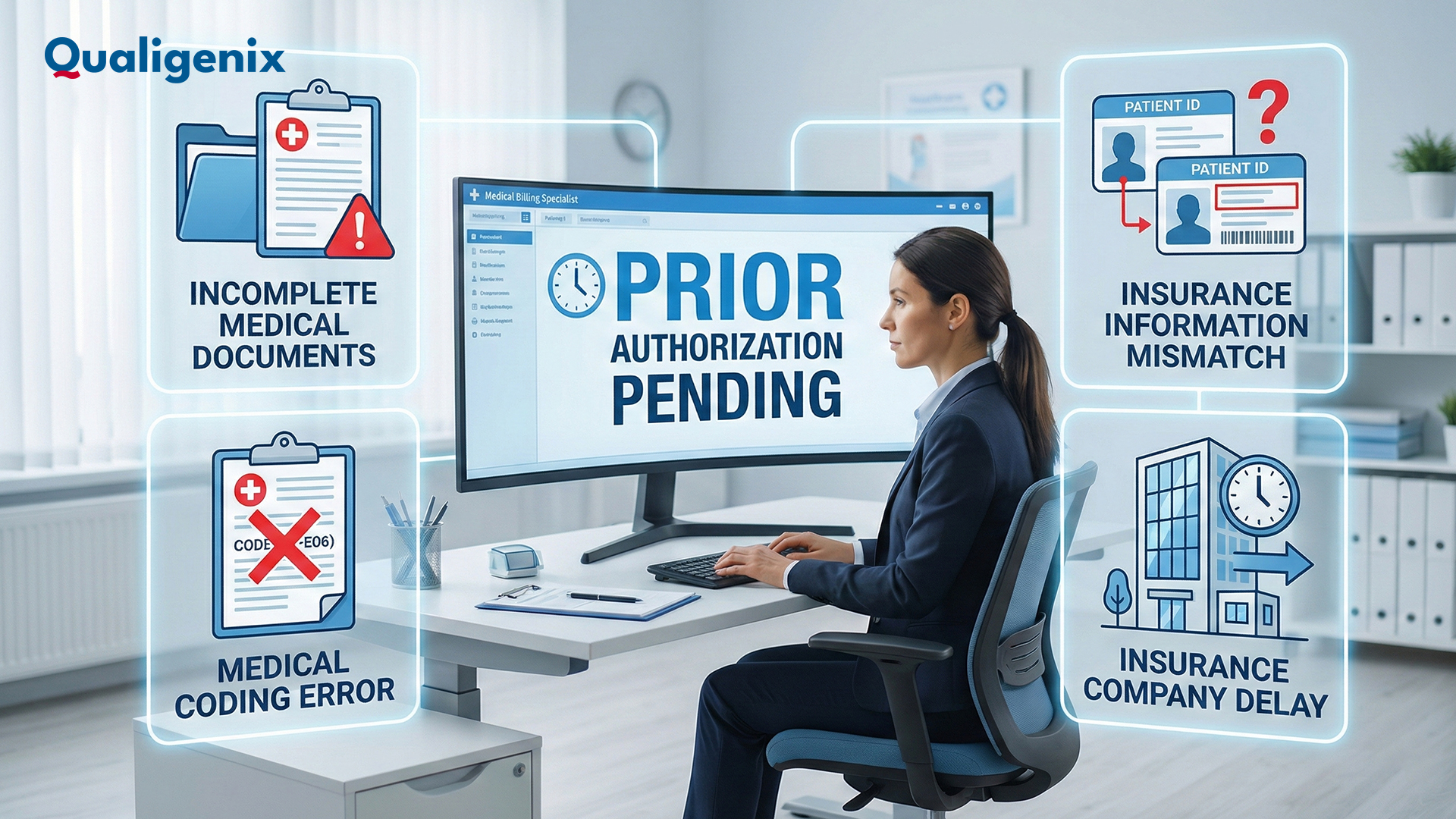
Contrary to popular belief, most authorization delays are not due solely to inefficiency on the part of the payer. In many instances, internal operational gaps are not inconsequential. Let’s break this down and identify the core problem areas that providers can directly control and improve:
Incomplete or Accurate Documentation
Missing clinical notes, non-specific medical justification, or obsolete records are some of the most common causes for delayed approvals. Reviewers postpone or return documentation for correction when it does not clearly align with payer medical necessity criteria.
Incorrect CPT Codes or Incorrect Diagnosis
Coding errors, misaligning diagnosis and procedure codes, for instance, commonly result in manual payer review or outright rejection. Even small errors can restart the authorization process and greatly add to the administrative workload.
Manual Follow-Ups and Poor Tracking
Without structured tracking of authorization, authorization requests may be overlooked or lost. Reliance on manual follow-ups, fax submissions, or disconnected payer portals means that deadlines and approvals are at risk of being missed.
Payor Specific Rule Variations
Each payer has unique authorization policies, timelines, and documentation requirements. Without payer-specific workflows, staff may be unwittingly submitting incomplete requests, leading to unnecessary authorization denials and delays.
Impact of Prior Authorization Delays on Revenue and Care
Authorization delays have several consequences beyond the inconvenience for administrative purposes.
Increased Claim Denials and AR Aging
No valid authorization for rendering of services, claims are usually denied. These denials lead to:
- Increased appeal volume
- Extended AR aging
- Delayed reimbursement
- Revenue write-offs
Authorization-related denials are one of the most preventable revenue loss sources when the process is managed well.
Disturbed Patient Care and Provider Workflows
From a clinical perspective, delays in approval may impact providers by requiring them to reschedule procedures or delay the start of treatment. This has implications for patient satisfaction, as well as increasing the burden on care teams who are responsible for both clinical work and administrative follow-ups.
Best Practices to Mitigate Prior Authorization Delays
Providers have an opportunity to greatly improve their authorization performance by taking a proactive approach to structured strategies. Let’s break down the core strategies that consistently help providers reduce delays and improve approval success rates:
Front End Authorization Checks
Conducting authorization checks prior to the scheduling of services ensures payer requirements are identified early. Front-end verification helps to reduce last-minute delays and timely claims submission.
For example, when a patient is scheduled for an outpatient CT scan, a front-end check can immediately flag whether prior authorization is required. This prevents last-minute cancellations, rescheduling, or rushed submissions that often lead to denials and delays.
Standardized Documentation Templates
Standardized templates that are in line with payer documentation requirements enhance submission quality. Consistent formatting helps include all appropriate clinical information and reduces requests for additional information.
For instance, a standardized template for physical therapy authorizations can prompt clinicians to include functional limitations, treatment history, and progress goals. This reduces payer requests for additional information and speeds up approval decisions.
Centralized Authorization Tracking
Centralized authorization tracking systems help create visibility into the status of requests, follow-up timelines, and approval expirations. This helps in reducing the missed deadlines and supports proactive intervention.
For example, a dashboard that shows pending approvals and approaching expiration dates allows staff to follow up with payers proactively. This prevents missed deadlines and avoids situations where services are delivered without valid authorization.
Payer Specific Authorization Playbooks
Developing payer-specific authorization playbooks permits teams to follow predefined workflows that are based on payer rules. This approach helps to increase accuracy, reduce rework, and decrease authorization turnaround time.
For example, a playbook for one commercial payer may specify required clinical attachments for imaging, preferred submission portals, and typical approval turnaround times. Another payer may require fax-based submissions or additional provider notes. Having these workflows documented reduces guesswork, minimizes rework, and improves first-pass approval rates.
How Qualigenix is Helping Reduce Prior Authorization Delays?

Qualigenix assists providers with prior authorization management in healthcare with structured, payer-aligned workflows to minimize delays and denials.
Their support includes:
- Eligibility verification and authorization requirement identification
- Documentation alignment to payer medical necessity criteria
- Payer rule mapping and policy updates in process
- Active follow-up to Prevent Stalled Requests
- Authorization denial prevention & appeal management
By linking authorization management into the overall revenue cycle, Qualigenix providers can create better approval timelines, safeguard reimbursement, and save on administrative burden.
Redesign Authorization Workflows for Better Financial Outcomes!
Prior authorization in healthcare is no longer a part of the process, but a core component of modern revenue cycle operations. While payer requirements keep expanding, providers are not at the mercy of authorization delays.
Organizations that invest in standardized workflows, accurate documentation, proactive tracking, and payer-specific strategies can significantly reduce approval timelines and prevent unnecessary denials. When it is managed effectively, prior authorization becomes a predictable and controllable process that supports timely patient care and financial stability.
FAQs
1. What is prior authorization in healthcare?
Prior authorization is a payer approval process that confirms a service is medically necessary before treatment. It protects coverage eligibility and prevents unexpected claim denials after care is delivered.
2. Why do prior authorizations get delayed?
Delays usually happen because of missing clinical notes, incorrect codes, incomplete forms, or poor follow-up tracking. Small documentation gaps often create long approval bottlenecks.
3. Does prior authorization affect claim approval?
Yes. Without valid authorization, payers may deny reimbursement even if care was appropriate. Proper authorization links clinical approval directly to successful payment outcomes.
4. How long does prior authorization usually take?
Timelines vary by payer and service type. Some approvals take hours, while complex cases may take several business days depending on review requirements.
5. Can prior authorization denials be appealed?
Yes. Providers can submit additional clinical documentation and request reconsideration. Successful appeals often depend on clear medical necessity evidence and timely follow-up.
6. Can prior authorization be outsourced?
Yes. Specialized authorization partners manage submissions, payer follow-ups, and documentation coordination. This reduces staff workload, speeds approvals, and improves overall authorization accuracy.
What’s Next
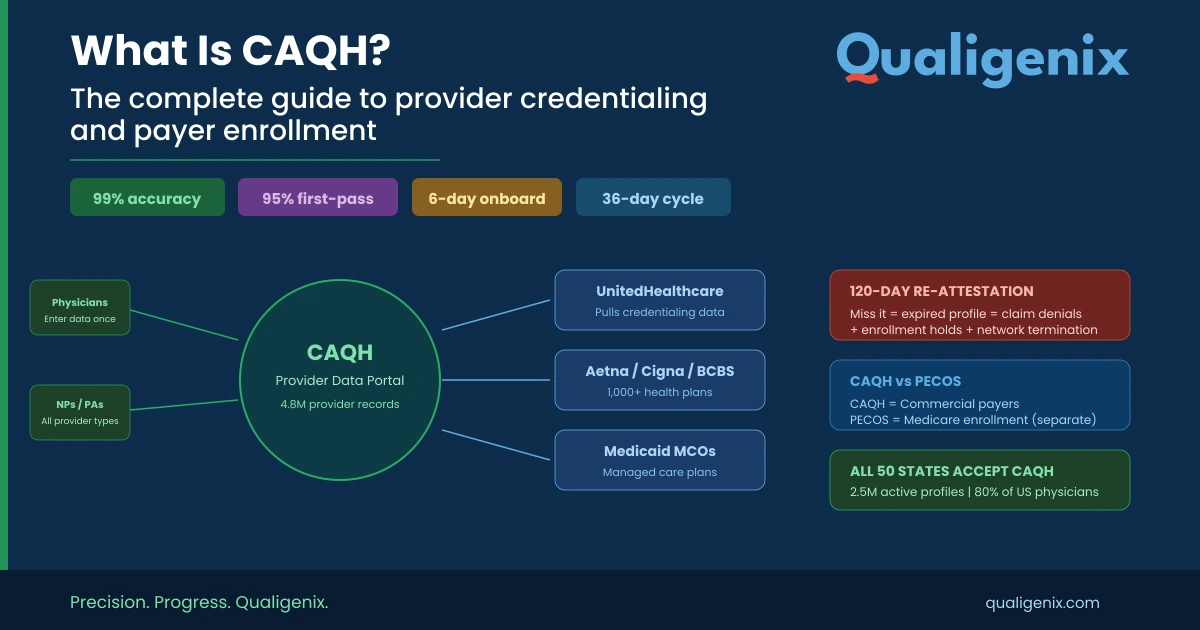
What Is CAQH? The Complete Guide to Provider Credentialing, ProView Setup, and Payer Enrollment
Summary: CAQH (Council for Affordable Quality Healthcare) is a nonprofit that operates the most widely used provider credentialing...
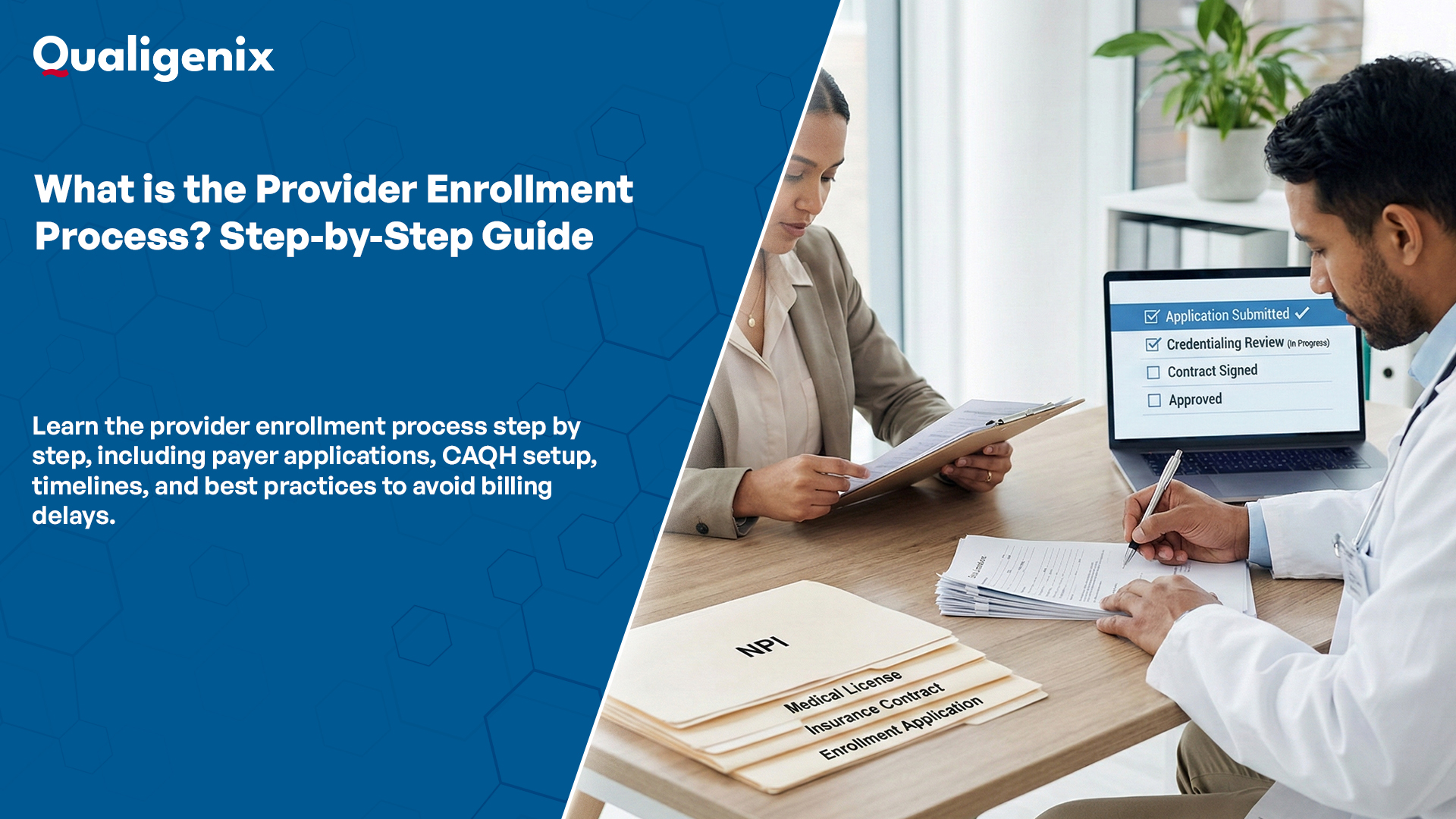
What is the Provider Enrollment Process? Step-by-Step Guide
Ever wonder why claims sit unpaid even after credentialing is complete? In many cases, the real bottleneck is the...

How to Appeal an Insurance Claim Denial: Step-by-Step Guide
A provider treats a patient, documents the visit carefully, and submits a clean claim. Two weeks later, the payer...