

Category: Revenue Cycle Management

Oncology Revenue Cycle Management: Guide for Cancer Care Practices 2026
Oncology billing is unlike any other specialty in medicine. Drug costs represent 60 to 80% of total revenue. A...
Urgent Care Revenue Cycle Management: Complete Guide for Urgent Care Centers 2026
Urgent care billing is harder than standard medical billing — and most general RCM processes are not built for...
Revenue Cycle Management Best Practices: 15 Proven Strategies for 2026
Most practices lose 10–20% of collectible revenue to preventable billing errors, unanswered denials, and slow collections. This guide covers...
Behavioral Health Revenue Cycle Management: Complete Guide for Mental Health Providers 2026
Behavioral health billing is harder than general medical billing — higher denial rates, complex prior authorization, time-based CPT coding,...
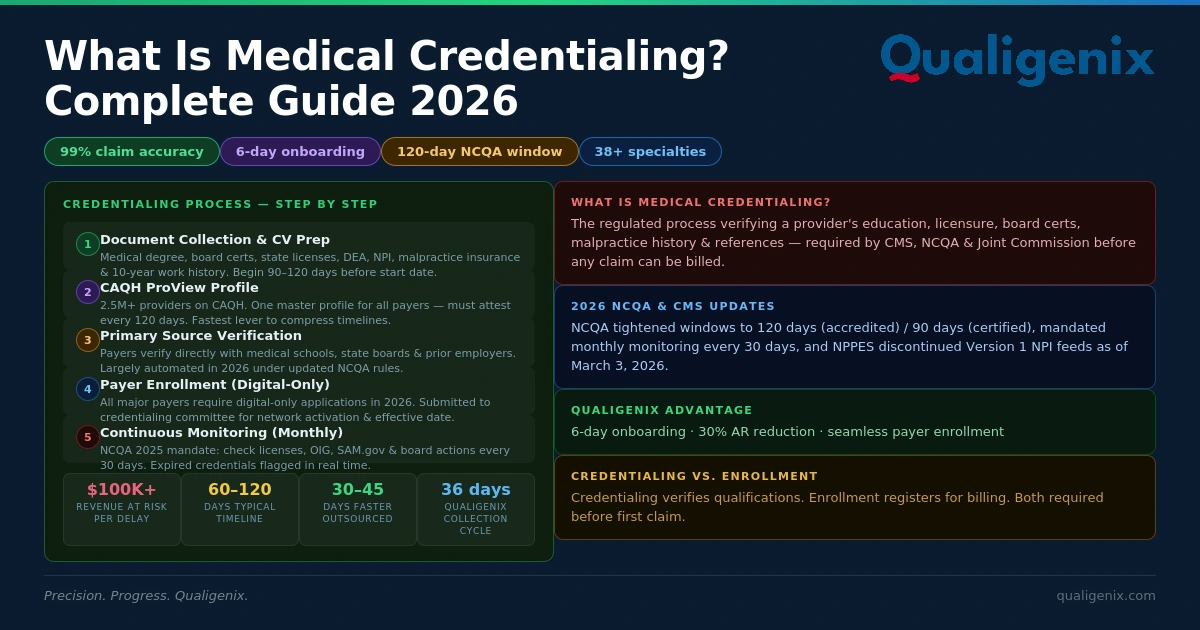
What Is Medical Credentialing? Complete Guide 2026
Key Takeaways: Medical credentialing is the required verification process that confirms a provider’s qualifications before they can treat patients...
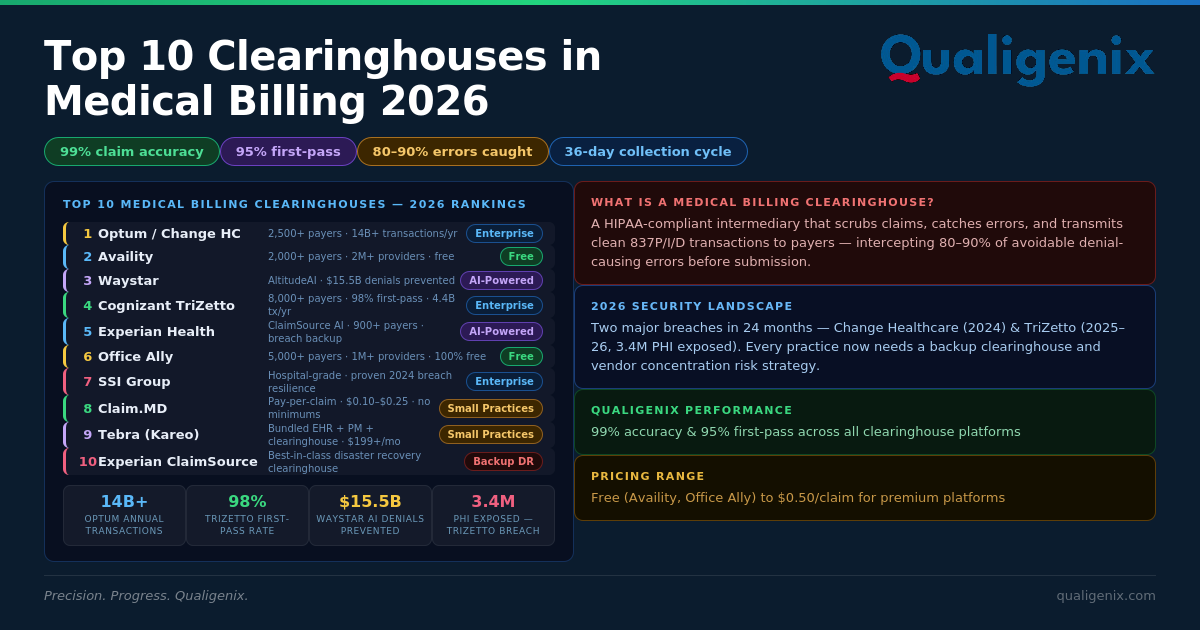
Top 10 Clearinghouses in Medical Billing 2026
A medical billing clearinghouse is the HIPAA-compliant intermediary between your practice and insurance payers — scrubbing claims, catching...
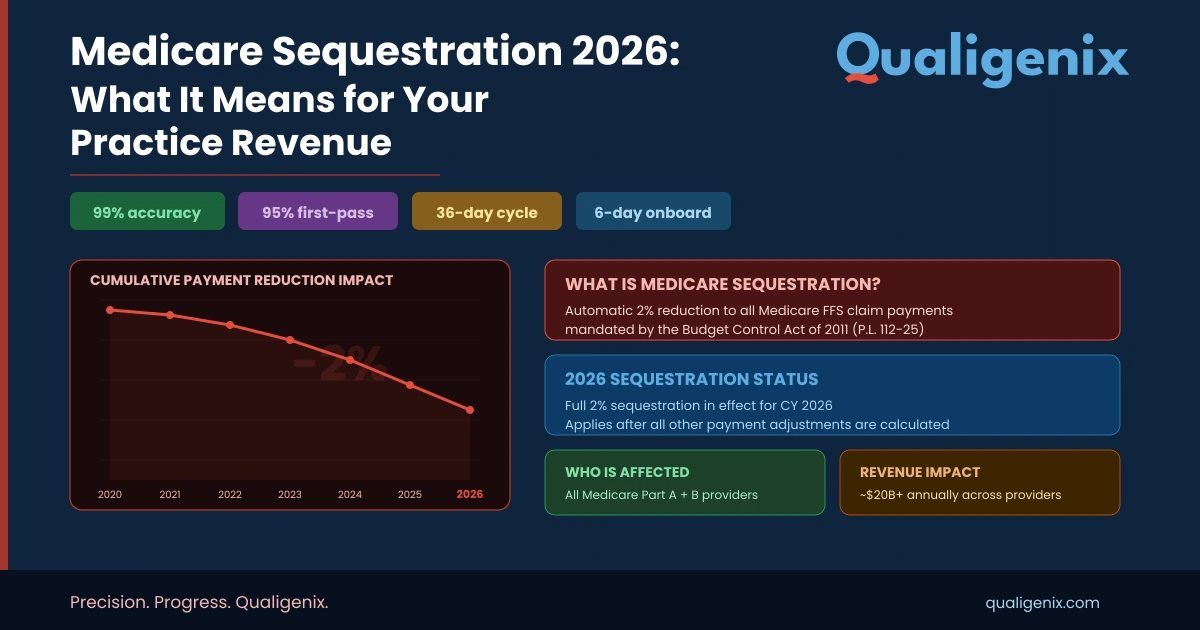
Medicare Sequestration 2026: What It Means for Your Practice Revenue
Summary Medicare sequestration is a mandatory across-the-board reduction in Medicare payments to providers, driven by two separate federal budget...
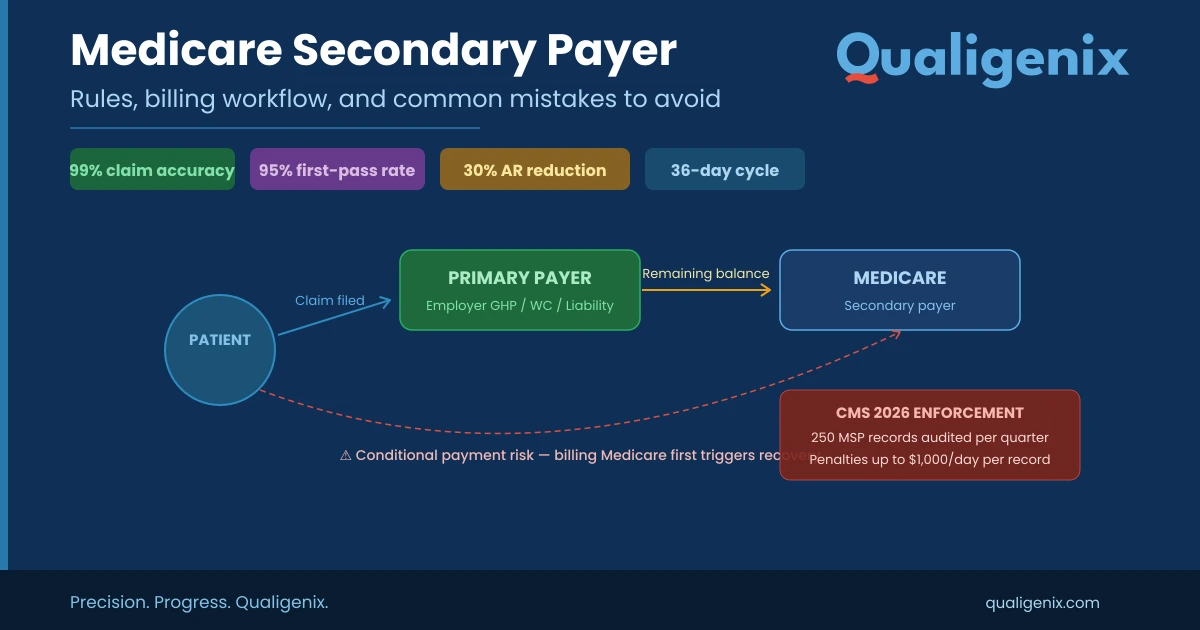
Medicare Secondary Payer: Rules, Billing Workflow, and Common Mistakes to Avoid
Medicare Secondary Payer (MSP) rules determine which insurer pays first when a Medicare beneficiary has other coverage. Providers must...
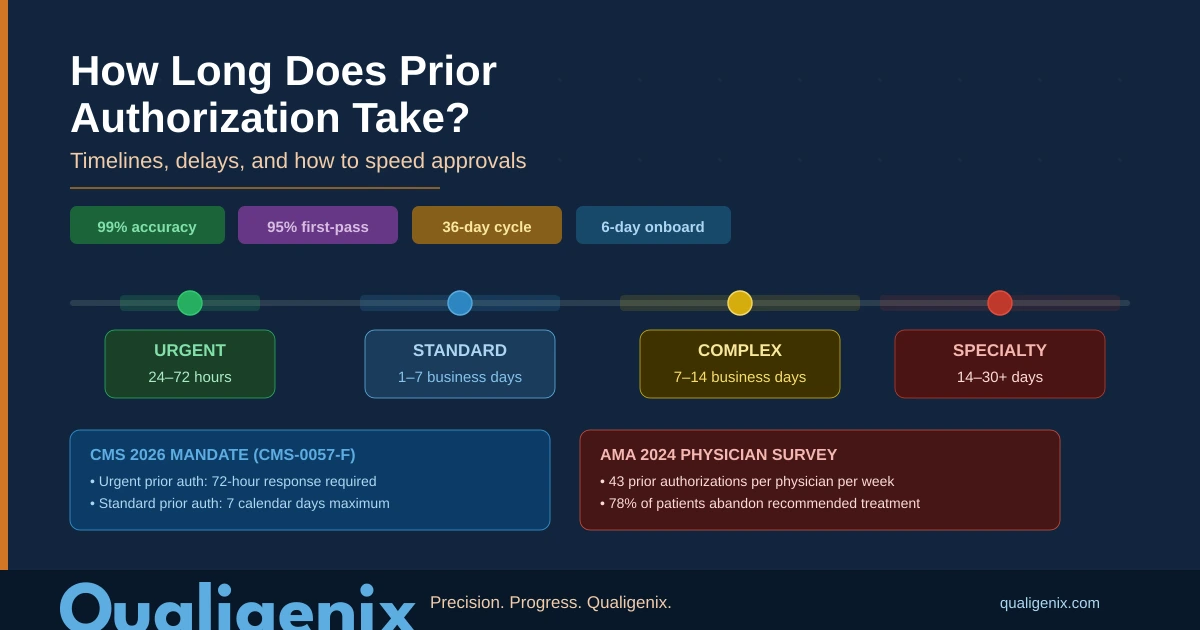
How Long Does Prior Authorization Take? Timelines, Delays, and How to Speed Approvals
Standard prior authorization requests take 1–7 business days, urgent requests 24–72 hours, and complex specialty cases can stretch...