
What is Accounts Receivable in Healthcare? Complete Guide
The Qualigenix Editorial Team comprises certified medical billing professionals, CPC-credentialed coders, prior authorization specialists, and revenue cycle consultants with more than 40 years of combined hands-on experience serving solo physicians, group practices, hospitals, and ASCs across 38+ specialties in the United States. Every guide, article, and resource published on the Qualigenix blog is researched against current CMS guidelines, Federal Register notices, AMA policy updates, and payer-specific billing rules — and reviewed for compliance accuracy before publication. Our content reflects the same standards we apply to our client work: 99% claim accuracy, 95% first-pass acceptance, and a 30% average reduction in AR days.


Accounts receivable in healthcare has become one of the biggest financial pressure points for providers. Payer delays, growing patient responsibility, and rising denials squeeze cash and strain staff. Initial claim denials climbed to about 11.8% in 2024, a level that drives more claims into rework and appeals. Many health systems now report days in accounts receivable in the 40s to 50s, which leaves revenue tied up on the balance sheet and reduces operating flexibility. Patient repayment rates have declined in recent years, so a larger share of balances shifts to self-pay and bad debt risk.
This article explains what healthcare accounts receivable is, how AR is generated, why AR ages, which metrics matter, the revenue impact, and how Qualigenix helps reduce ageing and accelerate cash flow.
What Is Accounts Receivable in Healthcare?
Healthcare accounts receivable refers to the outstanding reimbursements owed to a medical provider. These are funds that hospitals or clinics have earned but have not yet collected. This money comes from two primary sources. The first source is insurance companies. The second source is the patients themselves.
In many industries, a customer pays at the moment of service. Healthcare operates differently, where service happens first. The payment comes weeks or even months later. This time lag creates an asset known as Accounts Receivable (AR). It represents legal claims to cash that the practice expects to receive. Managing this asset requires precision. If these balances are not tracked, they often turn into bad debt.
How Healthcare AR Differs From Standard Accounting
Traditional companies invoice the customer directly. Healthcare providers must prove their work to insurance payers first. This table highlights the specific challenges that separate medical finance from standard business.
| Feature | Standard Corporate Accounting | Healthcare Accounts Receivable |
| Transaction Model | Direct invoice sent to the customer. | Claim submission to a third-party payer. |
| Payment Determination | Customer pays the full invoiced amount. | Payer adjudicates based on medical codes. |
| Rejection Sensitivity | Invoices are rarely rejected outright. | Claims often face denial for minor errors. |
| Required Expertise | General financial and bookkeeping skills. | Clinical coding knowledge plus finance. |
| Regulatory Scope | Standard commercial business laws. | Strict mandates like HIPAA and FDCPA. |
How Accounts Receivable in Healthcare Is Created?
The creation of AR begins the moment a patient walks through the door. It ends when the bank account receives the final dollar. Every step in this process must occur without error. A single mistake can delay payment for months.
From Service to Claim to Payment
The revenue cycle launches at the front desk, where staff verify insurance eligibility. Once the provider administers care, medical coders translate the clinical encounter into standard alphanumeric codes. These specific character sets define both the diagnosis and the procedure performed. Using this data, the billing team generates and transmits a claim to the insurance payer.
Submission immediately starts the clock for claim payment delays as the billed amount hits the AR ledger. The balance remains open during adjudication until the insurer sends a remittance advice. Payment posting occurs next, where staff reconcile the funds against the original charge to resolve the balance or transfer it to the next party.
Role of Payers and Patients in AR
Two parties drive most healthcare accounts receivable activity. Insurance payers handle the primary portion of reimbursement. They apply contract rates, benefit rules, and coverage limits before releasing payment.
Patients carry the remaining responsibility. This includes deductibles, copayments, and coinsurance. Patient balances now represent a larger share of AR due to widespread high-deductible health plans. This change increases collection effort. Insurance payments arrive electronically. Patient payments often require follow up calls, digital reminders, and billing statements. The shift adds operational pressure and makes patient engagement a critical part of AR success.
Why Healthcare Accounts Receivable Gets Stuck?
Accounts receivable should theoretically flow like a river. It often stagnates like a swamp instead. Balances age for operational reasons. They also age due to external barriers. Identifying these bottlenecks is essential for revenue cycle management.
Claim Denials and Rework
A denial backlog is the most common reason for stagnant AR. Insurance companies may deny a claim for reasons ranging from “duplicate billing” to “lack of prior authorization.” Each denied claim requires a human expert to review the error and resubmit the correction.
If the billing department is understaffed, these denials sit untouched. As the weeks pass, the probability of collecting on those claims drops significantly. Reworking a claim costs time and money, which often eats into the thin profit margins of the medical practice.
Payer Processing Delays
Payer processing delays push many clean claims into aging status. Some insurers rely on slow adjudication systems. Others pause claims while requesting records or additional proof. This places the account in pending status even when the provider submits accurate data.
Insurance aging starts during this hold period. Balances move from the 30-day bucket into the 60-day range and beyond. AR follow up teams must call payers to check status. These calls consume staff time and rarely speed up decisions. Most responses confirm that the claim remains under review. This delay increases days in AR and restricts consistent cash inflow.
Patient Collection Gaps
Collecting from patients is harder than collecting from an insurance company. Patients may not understand their bill. They may not have the funds to pay a large deductible, and often ignore the first statement.
These patient balances sit in AR for a long time. The provider sends a second statement. Then they send a third. Eventually, the account might go to a collection agency. This process takes months and significantly inflates the overall accounts receivable. Bad debt prevention strategies are necessary here. Collecting at the point of service is the best way to avoid this delay.
Key Metrics Used to Track Accounts Receivable in Healthcare
You cannot manage what you do not measure. Healthcare leaders use specific Key Performance Indicators (KPIs). These metrics reveal the health of the revenue cycle and show where the money is stuck.
Days in AR
The most common metric is days in AR. This number represents the average time it takes to get paid. You calculate it by dividing total accounts receivable by the average daily charges. A lower number is better. Most practices aim for fewer than 40 days.
A high number means claims are sitting unpaid. It could indicate a problem with the billing team and a specific payer. Monitoring this metric helps leaders spot trends. A sudden spike in days in AR requires immediate investigation.
Aging Buckets
Managers categorize receivables by age to understand the backlog. These categories are called aging buckets. The standard buckets are 0-30 days, 31-60 days, 61-90 days and over 90 days.
Balances in the 0-30 bucket are healthy. Balances over 90 days are critical. The likelihood of collecting a dollar drops significantly after three months. This is where insurance aging reports show which payers are the slowest. Reviewing these buckets helps staff prioritize their work with a focus on high-dollar claims in the older buckets first.
Collection Ratios and Write Offs
The net collection rate tells you how much of the allowed amount you actually collected. It accounts for contractual adjustments. A rate of 95% or higher is the goal. A lower rate suggests you are losing revenue to denials or uncollected patient debt.
Write offs represent money that the practice gives up on collecting. This happens when a claim denies and the appeal window expires. It also happens when a patient cannot pay.
How Poor AR Management Impacts Revenue?

When a facility neglects the management of its financial records, the negative consequences ripple through the entire organization. You will find that several key areas suffer when unpaid claims are allowed to stagnate.
Financial Instability and Cash Shortages
- Poor oversight of accounts receivable in healthcare leads to an immediate shortage of liquid funds.
- This lack of capital makes it difficult for a practice to cover payroll and essential medical supplies.
- Administrative and clinical staff often experience higher stress levels when the budget is tight.
Permanent Revenue Leakage
- Stagnant claims frequently result in revenue leakage because of strict insurance deadlines.
- Most payers enforce timely filing limits that render old balances completely uncollectible.
- Failing to perform a consistent AR follow up means the right to collect payment eventually vanishes.
Damage to Patient Relationships and Reputation
- Inaccurate billing cycles often trigger frequent disputes regarding patient balances.
- Individuals are more likely to seek treatment at a different facility if they encounter financial confusion.
- Transparent communication remains a vital component of the overall patient experience and professional reputation.
How Qualigenix Helps With Accounts Receivable in Healthcare?
Qualigenix understands the complexities of the modern revenue cycle. We do not just process claims. Our team actively manages the entire lifecycle of your receivables. We act as an extension of your business office. Our staff focuses on accelerating cash flow while you focus on patient care.
Persistent Payer Follow Up and Recovery
Qualigenix does not wait for checks to arrive in the mail. Our team jumps on the phone to chase every single dollar owed to your practice. We cut through the red tape of complex insurance systems. This persistence slashes your insurance aging and keeps your cash flow steady.
Precision Denial Management and Revenue Capture
A denial represents a challenge rather than a final answer. Our coders hunt for the root cause of every rejection. We fix the errors and resubmit the claims for immediate approval. This process turns potential write offs into actual revenue for your facility.
Patient Financial Support and Clear Reporting
We help your patients understand their financial obligations clearly. Our staff explains the bills with patience and professionalism. You also get access to detailed reports that show your exact days in AR. This transparency removes the guesswork from your financial planning.
Secure the Financial Future of Your Practice with Qualigenix!
Your accounts receivable in healthcare functions as the vital heartbeat of your medical practice. It demands constant vigilance and a smart strategy for payer collections. Frequent claim payment delays and a heavy denial backlog might seem inevitable in the current market. However, these hurdles are easy to clear when you perform a diligent AR follow up. Qualigenix stands ready to protect your revenue through expert bad debt prevention. You should focus on the health of your patients while we secure your payment. Reliable cash flow is the foundation of excellent care.
FAQs
1. What does accounts receivable mean in healthcare?
Accounts receivable in healthcare mean the total amount of money your practice is waiting to collect. This includes payments due from insurance companies and out-of-pocket costs owed by your patients.
2. Why do healthcare payments take so long?
Insurers use complex rules and manual reviews to verify every claim. These layers of bureaucracy, combined with frequent claim payment delays, slow down the entire reimbursement process.
3. What is a good days in AR number?
Most healthy practices aim for a benchmark of under 40 days. If your number stays below 35, you are performing exceptionally well in your revenue cycle management.
4. How can clinics reduce aging AR?
You must prioritize consistent AR follow up and fix coding errors immediately. Accurate initial billing prevents the denial backlog that keeps your money trapped for months.
5. Is patient AR harder to collect than insurance AR?
Yes, because individuals lack the automated payment systems that insurers use. Many patients struggle with high deductibles, which makes patient balances more difficult to recover than insurance claims.
6. Can AR be outsourced?
Absolutely. Partnering with a specialized team allows you to offload the stress of payer collections. These experts use dedicated technology to accelerate cash flow and reduce aging.
What’s Next
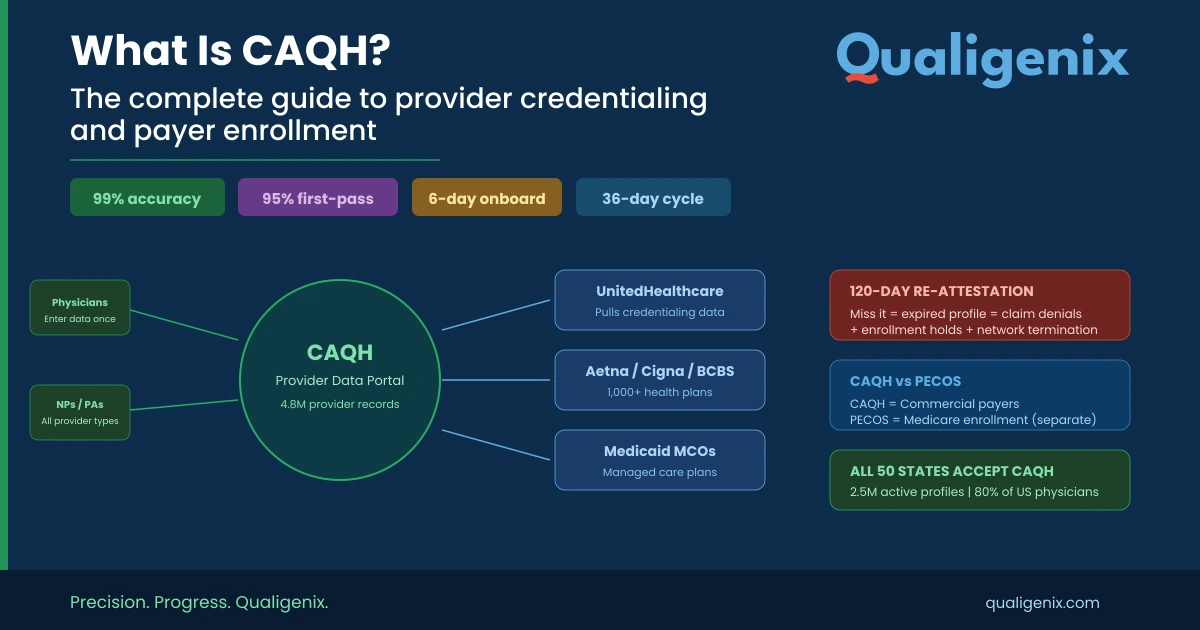
What Is CAQH? The Complete Guide to Provider Credentialing, ProView Setup, and Payer Enrollment
Summary: CAQH (Council for Affordable Quality Healthcare) is a nonprofit that operates the most widely used provider credentialing...

What is the Provider Enrollment Process? Step-by-Step Guide
Ever wonder why claims sit unpaid even after credentialing is complete? In many cases, the real bottleneck is the...

How to Appeal an Insurance Claim Denial: Step-by-Step Guide
A provider treats a patient, documents the visit carefully, and submits a clean claim. Two weeks later, the payer...