
What is Behavioral Health Billing? Complete Guide 2026
The Qualigenix Editorial Team comprises certified medical billing professionals, CPC-credentialed coders, prior authorization specialists, and revenue cycle consultants with more than 40 years of combined hands-on experience serving solo physicians, group practices, hospitals, and ASCs across 38+ specialties in the United States. Every guide, article, and resource published on the Qualigenix blog is researched against current CMS guidelines, Federal Register notices, AMA policy updates, and payer-specific billing rules — and reviewed for compliance accuracy before publication. Our content reflects the same standards we apply to our client work: 99% claim accuracy, 95% first-pass acceptance, and a 30% average reduction in AR days.


A therapy session does not begin or end when the patient logs off or leaves the clinic. Behind every visit is a complex billing workflow that turns clinical notes into time-based codes, creates claims, and secures reimbursement. This is the backbone of behavioral health billing, and in 2026, it is more demanding than ever. A 2024 revenue cycle report showed initial claim denial rates nearing 11.8%, meaning almost one in eight claims faces rejection on first submission. Each denial slows cash flow and adds pressure on already stretched teams.
With psychotherapy, psychiatric evaluations, substance use treatment, and telehealth all following different billing rules, even small errors can trigger delays. This guide explains the process, key codes, challenges, and proven workflows that protect revenue and keep care moving.
What Is Behavioral Health Billing and Why Is It Different?
Behavioral health billing is the process of getting paid for services related to mental health care. This includes therapy sessions, psychiatric evaluations, substance use treatment, and counseling support. Here is what makes behavioral health billing unique:
- Time-based coding drives reimbursement: Behavioral health visits are billed by session length. Providers use CPT codes behavioral health that differ for 30, 45, or 60 minutes.
- More billing steps are involved: Billing requires more than choosing a code. Teams must complete insurance verification behavioral health, check coverage limits, and secure prior authorization behavioral health when required.
- Documentation has a direct impact on payment: Payers expect clear progress notes, proof of medical necessity, and strong clinical documentation standards. Missing details can lead to denied or delayed claims.
- Telehealth adds extra compliance rules: Virtual visits must include correct telehealth billing modifiers and follow payer-specific policies. Errors here are a common denial trigger.
- Coverage limits are stricter in mental health care: Many insurers limit the number of therapy sessions covered each year, which makes billing accuracy even more important.
Because of these factors, behavioral health medical billing requires tighter workflows and more daily oversight than standard medical billing.
Key CPT Codes Behavioral Health Providers Use
Accurate coding sits at the center of behavioral health billing. Most services are billed using time-based psychotherapy codes. That means the CPT code depends on how long the provider spent with the patient. The most common psychotherapy codes include:
- 90832 for a 30-minute session
- 90834 for a 45-minute session
- 90837 for a 60-minute session
These codes may look similar, but payers treat them very differently. Session time, diagnosis support, and clinical notes must all match the code selected.
Behavioral health also includes other service types:
- Family therapy and group counseling use separate CPT codes and require specific documentation.
- Psychiatric evaluations and medication management fall into different coding ranges altogether.
In behavioral health medical billing, even one incorrect CPT selection or missing time detail can result in an underpaid or denied claim.
Telehealth and Modifier Codes
Telehealth has become a major part of behavioral health care, but billing it correctly requires extra steps. Remote therapy and psychiatry visits must include the right telehealth billing modifiers, such as:
- Modifier 95
- Modifier GT
These modifiers tell the payer the service was delivered virtually. Without them, the claim may be processed incorrectly or rejected. As payers review telehealth claims closely, accuracy is critical. The wrong modifier or missing indicator can quickly delay reimbursement and increase denial risk.
Behavioral Health Billing Challenges

Behavioral health providers often face higher denial rates than many other specialties. The rules are stricter, documentation standards are tighter, and payers review mental health claims more closely. Common billing challenges include:
- Missing medical necessity support: Claims are denied when progress notes do not clearly justify the service provided.
- Authorization gaps: Many visits require prior authorization behavioral health approval before care is delivered.
- Coding mismatches and time-based errors: Therapy billing depends on accurate session length and correct CPT selection.
- Complex payer specific rules: Coverage limits, reimbursement policies, and requirements vary widely across insurers.
- Telehealth compliance mistakes: Incorrect or missing telehealth billing modifiers often trigger denials.
- Workflow breaks from staff turnover: Inconsistent training and staffing changes create billing inconsistencies.
Telehealth has also expanded care access, but it has added new billing risks. One missing modifier or unclear session note can quickly delay reimbursement. That is why strong denial prevention is critical in behavioral health RCM.
Common Reasons Claims Get Denied
Most denials in behavioral health medical billing fall into a few repeated patterns.
- Documentation does not match the claim: Payers deny claims when CPT codes are not supported by progress notes. Medical necessity must be clear.
- Authorization is missing or expired: Many therapy and psychiatry services require approval before the visit. Without it, payment is blocked.
- Session times are unclear: Time-based codes demand an accurate session length. Missing time documentation leads to rejection.
- Diagnosis codes lack justification: Diagnosis must align with the service billed. Vague or unsupported codes raise red flags.
In high-volume behavioral health practices, these small errors add up fast. Without tight workflows, denials grow, cash flow slows, and revenue leakage becomes difficult to control.
Best Practices for Behavioral Health Medical Billing
Billing success in behavioral health billing depends on strong systems, not chance. Because time-based coding and payer rules are strict, small workflow improvements can reduce denials and speed reimbursement. Here are three areas that make the biggest impact:
Use Technology and EHR Integration
Many billing issues begin when systems do not communicate. Scheduling, clinical notes, and coding often sit in separate platforms. These disconnects create gaps, and that is where costly errors start to appear. Integrated electronic tools help bring everything together:
- Appointments
- Clinical documentation
- CPT code selection
- Claim generation
When workflows are linked, billing teams catch missing details early. Claims move faster, coding stays accurate, and reimbursement improves. Strong EHR integration also supports better clinical documentation standards, which payers demand in mental health care.
Active Denial Tracking
Denials will happen, but repeat denials should not. The best billing teams track rejection patterns instead of treating every denial as a one-off issue. They monitor:
- Which CPT codes are denied most
- Which payers reject claims frequently
- Where documentation gaps occur
This kind of denial management behavioral health approach helps teams fix root causes. Over time, fewer claims come back unpaid, and cash flow becomes more predictable.
Ongoing Training
Behavioral health billing rules change often. Payers update requirements, telehealth policies shift and coding guidelines evolve. Without regular training, teams can fall behind quickly. Ongoing education keeps teams aligned with:
- Time-based CPT updates
- New payer policies
- Compliance expectations
- Documentation requirements
- Telehealth billing modifiers
Clinics that invest in training reduce errors, improve accuracy, and stay audit-ready.
Behavioral Health Revenue Cycle Management Overview
Behavioral health RCM is the full financial workflow that connects patient care to reimbursement. It starts with intake and insurance verification behavioral health, then moves through coding, claim submission, and payment collection. A strong RCM process includes:
-
- Eligibility checks and authorizations
- Accurate time-based coding
- Clean claim submission
- Denial management behavioral health
- Payment posting and follow-up
As behavioral health claims depend heavily on clinical notes and documentation, billing accuracy must match care delivery. When behavioral health RCM is structured well, clinics reduce denials, protect compliance, and keep cash flow steady.
How Qualigenix Can Help You With Behavioral Health Billing?

Behavioral health billing should not feel like a constant battle. Here is how we support behavioral health practices from start to finish:
Fix Issues Before They Become Denials
Most denials start with small gaps, such as missed eligibility checks, incomplete notes, or time-based coding errors. We handle insurance verification behavioral health, manage prior authorization behavioral health, and apply accurate CPT coding so claims go out clean and get paid faster.
Built for Therapy, Psychiatry, and Telehealth Workflows
Behavioral health has unique billing demands. Qualigenix supports psychotherapy, psychiatry, substance use care, and group counseling services with specialized workflows. We handle strict payer rules, apply correct telehealth billing modifiers, and align clinical records with billing data.
End-to-End Support That Improves Cash Flow
Our team tracks denials, manages appeals, and posts payments through one coordinated system. This keeps AR from piling up, improves cash flow, and gives clinics more time to focus on patient care.
Strengthen Your Behavioral Health Billing Workflow Today!
Running a strong behavioral health billing system in 2026 is no longer optional. With tighter payer rules, expanding telehealth care, and rising documentation demands, clinics need precision at every step of the billing cycle. Even small gaps in coding or authorization can lead to denials and delayed revenue. But when the right workflows are in place, practices collect faster, reduce billing stress, and protect long-term financial stability. At Qualigenix, we help behavioral health providers strengthen their revenue cycle with expert billing support, denial prevention, and compliance-focused systems!
FAQs
1. What services fall under behavioral health billing?
Behavioral health billing covers services like psychotherapy, psychiatric evaluations, substance use disorder treatment, family counseling, group therapy, and telehealth mental health visits. Any care tied to mental health support or behavioral treatment falls under this billing category.
2. Why are behavioral health claims denied so often?
Claims are often denied when session times, CPT codes, diagnosis links, authorizations, or telehealth billing modifiers do not match payer rules. Missing documentation or unclear medical necessity also increases denial risk in behavioral health practices
3. How does behavioral health medical billing differ from regular billing?
Behavioral health medical billing relies heavily on time-based CPT coding, stricter documentation requirements, and variable insurance coverage limits. Because payers closely review therapy and psychiatry claims, billing carries higher compliance and denial risk.
4. Can telehealth be billed for behavioral health services?
Yes, telehealth services are billable for behavioral health when the correct modifiers are applied and clinical documentation supports the visit. Providers must also follow payer-specific telehealth rules to avoid reimbursement delays or denials.
5. What role does RCM play in behavioral health billing?
Behavioral health RCM connects intake, eligibility checks, coding, claim submission, denial management, and collections into one workflow. A strong RCM system reduces delays, improves reimbursement speed, and protects clinics from revenue leakage.
6. Do behavioral health clinics need specialized billing teams?
Yes, behavioral health clinics benefit from trained billing teams who understand time-based coding, payer rules, and documentation standards. Specialized staff reduce errors, strengthen compliance, and improve long-term reimbursement outcomes for mental health services.
What’s Next
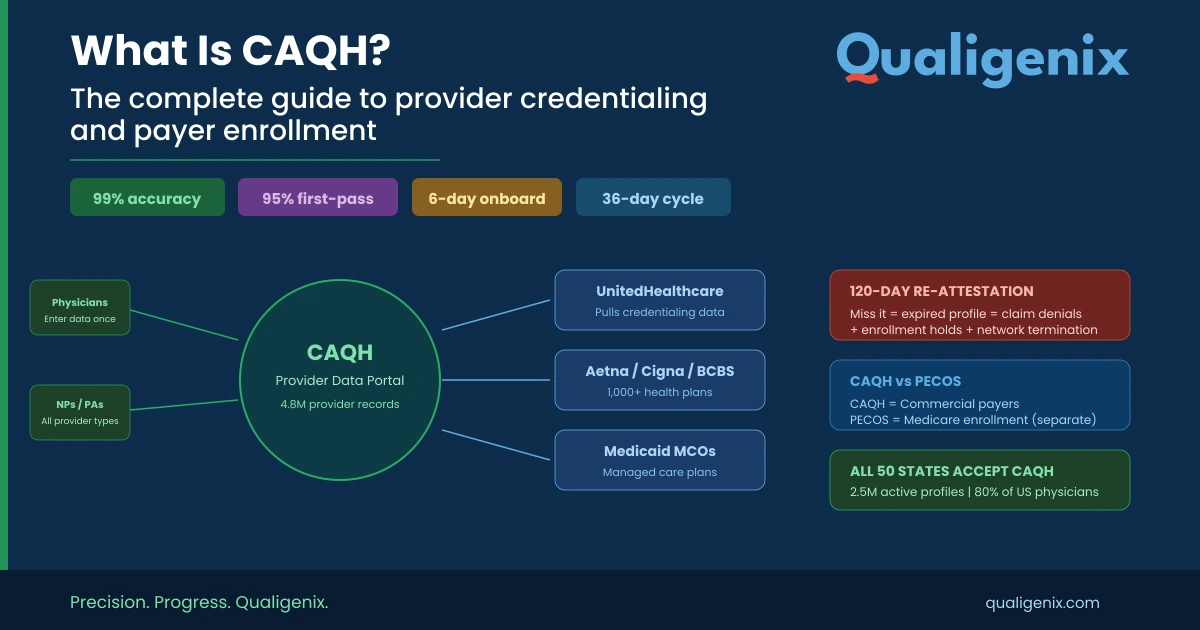
What Is CAQH? The Complete Guide to Provider Credentialing, ProView Setup, and Payer Enrollment
Summary: CAQH (Council for Affordable Quality Healthcare) is a nonprofit that operates the most widely used provider credentialing...

What is the Provider Enrollment Process? Step-by-Step Guide
Ever wonder why claims sit unpaid even after credentialing is complete? In many cases, the real bottleneck is the...

How to Appeal an Insurance Claim Denial: Step-by-Step Guide
A provider treats a patient, documents the visit carefully, and submits a clean claim. Two weeks later, the payer...