
Top 5 Revenue Cycle Management Trends to Watch in 2026
The Qualigenix Editorial Team comprises certified medical billing professionals, CPC-credentialed coders, prior authorization specialists, and revenue cycle consultants with more than 40 years of combined hands-on experience serving solo physicians, group practices, hospitals, and ASCs across 38+ specialties in the United States. Every guide, article, and resource published on the Qualigenix blog is researched against current CMS guidelines, Federal Register notices, AMA policy updates, and payer-specific billing rules — and reviewed for compliance accuracy before publication. Our content reflects the same standards we apply to our client work: 99% claim accuracy, 95% first-pass acceptance, and a 30% average reduction in AR days.


Much of what shapes your organization’s financial health starts right from or even before the patient visit. In 2026, revenue cycle management looks very different from just a year or two ago. Denials are climbing, automation is spreading fast, and new regulations are changing how claims move through the system. The numbers tell the story: first-pass denial rates reached nearly 12% in 2024, whereas the global RCM market continues to grow as providers look for efficiency and accuracy.
You probably already feel that shift every day. Coding rules update constantly. Payers expect clean and faster data. And when systems fall behind, cash flow stalls. That is why staying ahead of the latest revenue cycle management trends matters more than ever. If you want to see how AI, automation, regulatory change, and patient engagement combine to reshape the future of RCM trends, read on!
Trend #1: AI and Automation Scaling Across the RCM
Revenue cycle teams are done experimenting with automation. The question now is scale. In 2026, over 92% of RCM leaders plan to expand AI initiatives across eligibility, coding, and payment posting. The gains are no longer theoretical. Organizations that operationalize AI are reporting 13-37% fewer denials and a huge drop in labor cost per claim.
Predictive Analytics for Denial Prevention and Accuracy
Predictive models now assess payer patterns, documentation gaps, and coding precision in real time. These insights surface risk before submission. This revenue cycle management trend allows teams to fix issues upstream. The result is cleaner claims, stronger compliance, and a faster cash cycle.
RPA for Repetitive Billing Tasks and Claim Scrubbing
RPA has moved beyond macros and bots. Leading systems deploy automated scrubbers that check thousands of claim fields, validate codes, and verify demographic data within seconds. That precision eliminates manual backlogs and creates a consistent standard for accuracy.
Automation in Patient Eligibility, Authorizations, and Payment Posting
Automation is also transforming the front and back ends. Eligibility verification happens instantly, prior authorizations route electronically through payer APIs, and payment posting occurs the moment ERA files hit the system. The effect is lower AR days, better interoperability, and a workforce focused on analysis rather than data entry.
In 2026:
- Predictive AI will drive double-digit improvements in first-pass yield
- More than half of the eligibility and authorization workflows will run autonomously
- Manual payment posting will fall below 25% of total transactions
Your move: Appoint an RCM automation lead. Treat AI as infrastructure, not a pilot. Invest in data governance and workflow redesign before layering on new tools.
Trend #2: Regulatory Changes and Value-Based Care Pressure
Technology can accelerate claims, but regulation now dictates the rules of engagement. CMS, payers, and legislators are reshaping how revenue is earned, reported, and audited. Compliance and adaptability are no longer optional; they are survival metrics.
Evolving Reimbursement Models and Bundled Payments
Value-based care continues to expand. CMS is piloting additional bundled payment models in 2026 that tie reimbursement to outcomes, cost efficiency, and patient experience. Hospitals must now align RCM operations with quality metrics and risk-sharing arrangements to protect revenue integrity.
Transparency Laws and Patient Billing Regulation
The future of RCM trends also includes stricter transparency requirements. Updated federal rules mandate clear, itemized cost estimates and patient-friendly billing statements. Providers that embed these tools directly in their RCM platforms will see higher collection rates and stronger patient financial engagement.
Telehealth and Remote Monitoring Billing Rules with CPT and ICD-10 Updates
CMS 2026 rule introduces new codes for telehealth billing and remote patient monitoring while reinstating some pre-pandemic geographic restrictions. Each change demands ongoing updates to coding logic and payer configuration to prevent denials tied to outdated standards.
Your move: Embed regulatory monitoring into your RCM dashboards. Align coding, compliance, and finance teams to update rules simultaneously. Treat transparency and telehealth compliance as part of your revenue strategy, not as side policies.
Trend #3: Patient Financial Engagement Becomes Core
Financial engagement is now a revenue strategy, not a customer service feature. Patients expect clarity, convenience, and choice, and providers that deliver all three are seeing measurable gains in collection rates and satisfaction scores. As RCM technology trends mature, front-end transparency is proving just as valuable as back-end automation.
Upfront Cost Estimates and Point-of-Service Payment Options
Accurate cost estimates help patients plan and reduce surprise bills. Automated tools integrated with eligibility checks now calculate out-of-pocket costs before visits, while digital terminals at check-in offer multiple POS payment methods. This shift improves upfront collections and reduces billing friction later.
Self-Service Billing Portals and Mobile-First Tools
Patients want autonomy. Secure self-service portals and mobile payment tools allow them to view balances, set up auto-pay, and communicate with billing teams without phone queues. These mobile-first options strengthen patient financial engagement and shorten the collection window.
Flexible Payment Plans and Transparent Statements
Transparency now drives trust. Clear, itemized statements with flexible payment options create fewer disputes and improve cash flow. Providers using digital statements and real-time notifications are reporting a 20–25% increase in patient payment rates.
In 2026:
- Text-to-pay and automated reminders will be standard across RCM platforms
- Point-of-service collections will rise among digitally enabled providers
- Transparent statements will become a regulatory and brand requirement
Your move: Treat billing like a consumer product. Test new payment experiences and track NPS on every financial interaction.
Trend #4: Data Visibility, Interoperability, and Analytics
Revenue cycle leaders cannot improve what they cannot see. The next wave of RCM technology innovations is centered on unified data, real-time analytics, and intelligent forecasting. Clean, connected data enables faster decisions and sharper accountability across every stage of the revenue cycle.
Unified Data Platforms and Real-Time Dashboarding
Modern RCM platforms are merging disparate data, EHRs, clearinghouses, and payer feeds into unified dashboards. Leaders now track RCM forecasts, denial rates, and AR trends in real time. This visibility helps identify bottlenecks instantly rather than weeks later.
API-Driven System Integration and EHR/RCM Bridging
True interoperability is finally within reach. API-driven integrations bridge EHR, billing, and analytics platforms, removing silos that have long slowed RCM performance. Seamless data flow means cleaner claims and fewer rekeying errors.
Forecasting Revenue and Identifying Revenue Leakage
Predictive analytics is taking on a new role—financial foresight. Revenue leaders use AI models to forecast payer mix, payment delays, and potential revenue leakage before it impacts cash flow. Data-driven forecasting helps CFOs plan staffing, budgets, and capital decisions with precision.
In 2026:
- RCM platforms will feature embedded analytics dashboards
- API-first integration will become a procurement requirement
- Predictive analytics will identify revenue leakage weeks before impact
Your move: Build a unified data strategy that treats analytics as an operational tool, not a quarterly report.
Trend #5: Cybersecurity and Resilient, Flexible RCM Models
Cybersecurity is now a financial priority. Attacks on healthcare billing systems rose sharply in 2024, disrupting payments and exposing patient data. In 2026, cybersecurity in RCM will determine how quickly organizations recover from breaches and maintain business continuity.
Heightened Security Protocols: Encryption and Certifications
Modern RCM vendors are implementing AES-level encryption, SOC 2 Type II certification, and zero-trust frameworks. These safeguards protect sensitive billing and patient data while meeting HIPAA and payer compliance standards. Security has become a contractual expectation, not an optional feature.
Remote and Hybrid RCM Teams and Platforms
The shift toward remote RCM operations continues to expand. Cloud-based workflows let billing teams access data securely from anywhere, while multi-factor authentication and endpoint monitoring maintain compliance. Flexibility in workforce design reduces downtime and supports 24/7 processing.
Backup Paths, Multi-Clearinghouse Failover, and Redundancy
Resilience is the new uptime. High-performing organizations now use multi-clearinghouse routing, redundant databases, and automated backup systems to prevent claim flow interruptions. These backup paths keep automation trends running smoothly even during outages or cyber incidents.
In 2026:
- Most of the RCM vendors will require cybersecurity certification for contracts
- Dual-clearinghouse redundancy will become a best practice
- Downtime recovery will be measured in hours, not days
Your move: Integrate cybersecurity into RCM leadership meetings. Make resilience part of your revenue continuity plan, not just IT policy.
How Qualigenix Can Help You Harness These RCM Trends in 2026

Qualigenix combines deep domain knowledge with next-generation technology and unwavering compliance discipline. Our expertise spans every stage of the revenue cycle, from intake and coding to denial recovery and analytics. We design RCM technology innovations that improve accuracy, speed, and transparency, aligning seamlessly with the latest regulatory changes and payer requirements.
What You Get
With Qualigenix, you gain an integrated ecosystem of tools and support. Our platform delivers AI and rule-based automation, real-time performance dashboards, and advanced patient financial engagement modules. You also receive end-to-end regulatory compliance support, from prior authorization to telehealth billing updates, ensuring claims stay clean and compliant.
How We Deliver
We follow a phased rollout approach tailored to your workflows. Every deployment includes KPI tracking, benchmark reporting, and staff enablement. Our hybrid delivery model combines remote specialists and onshore teams, supported by secure, cybersecurity-ready RCM infrastructure that meets global compliance standards.
Partner with Qualigenix to Transform Your RCM Strategy for 2026!
As revenue cycle management evolves, success will depend on how quickly you adapt. Practices that automate early, stay compliant, engage patients, and protect their data will set the benchmark for financial performance. The time to act is now. Integrate these revenue cycle management trends into your roadmap, measure outcomes relentlessly, and partner with a trusted expert like Qualigenix to accelerate results. The future of RCM is already here. Let’s build it together!
FAQs
1. What is the biggest RCM trend in 2026?
The biggest RCM trend in 2026 is AI driven automation combined with proactive denial prevention. The focus has shifted from hype to practical use cases. Billing teams are integrating smarter workflows and using data insights to prevent denials before they occur, even though full end to end automation is still developing.
2. Will value based care completely replace fee for service?
No. Fee for service will continue for many care models, but value based and bundled payments are expanding. The payment model is shifting toward rewarding care quality and coordination rather than service volume alone.
3. How much time does it take to see benefits from RCM automation?
Most organizations start seeing measurable benefits within 60 to 90 days. Improvements typically include higher clean claim rates, fewer denials, and reduced accounts receivable days as manual steps and errors are removed from billing workflows.
4. How is the patient billing experience changing?
Patients now expect transparency and convenience. They want clear cost estimates, flexible payment options, and simple self service billing portals that make medical billing easier to understand and less stressful.
5. Why is cybersecurity more critical for RCM now?
With remote work, cloud platforms, and frequent data exchange, patient and financial data move across more systems than before. Strong cybersecurity protects sensitive information, prevents breaches, and keeps revenue operations stable.
What’s Next
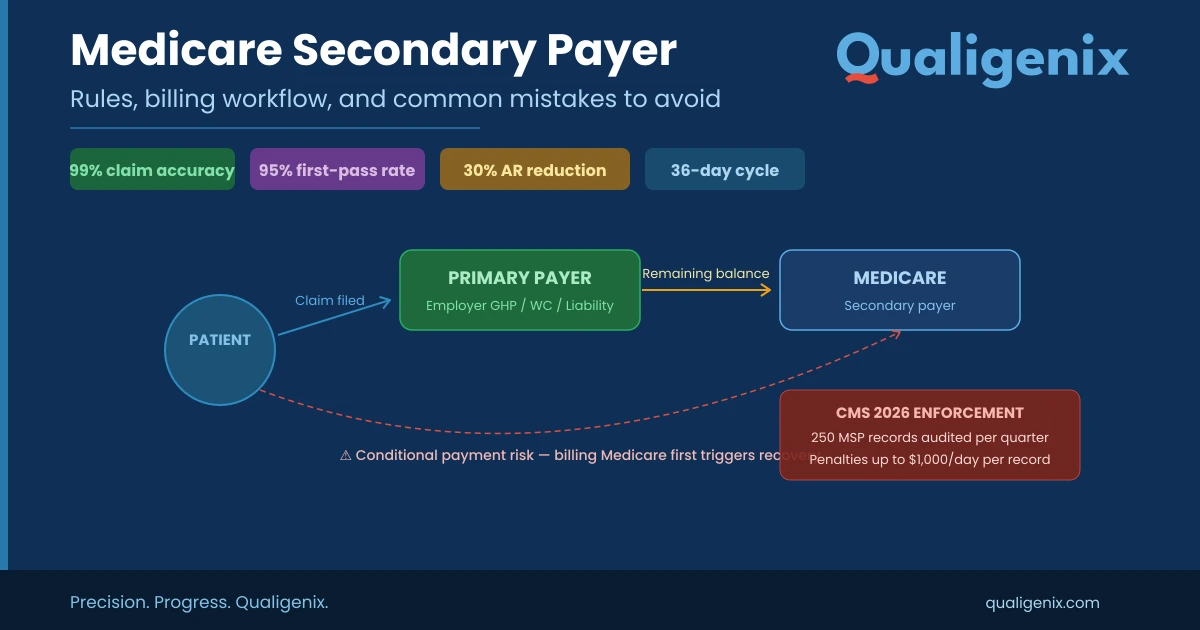
Medicare Secondary Payer: Rules, Billing Workflow, and Common Mistakes to Avoid
Summary Medicare secondary payer (MSP) rules determine which insurer pays first when a Medicare beneficiary has other coverage. Providers...
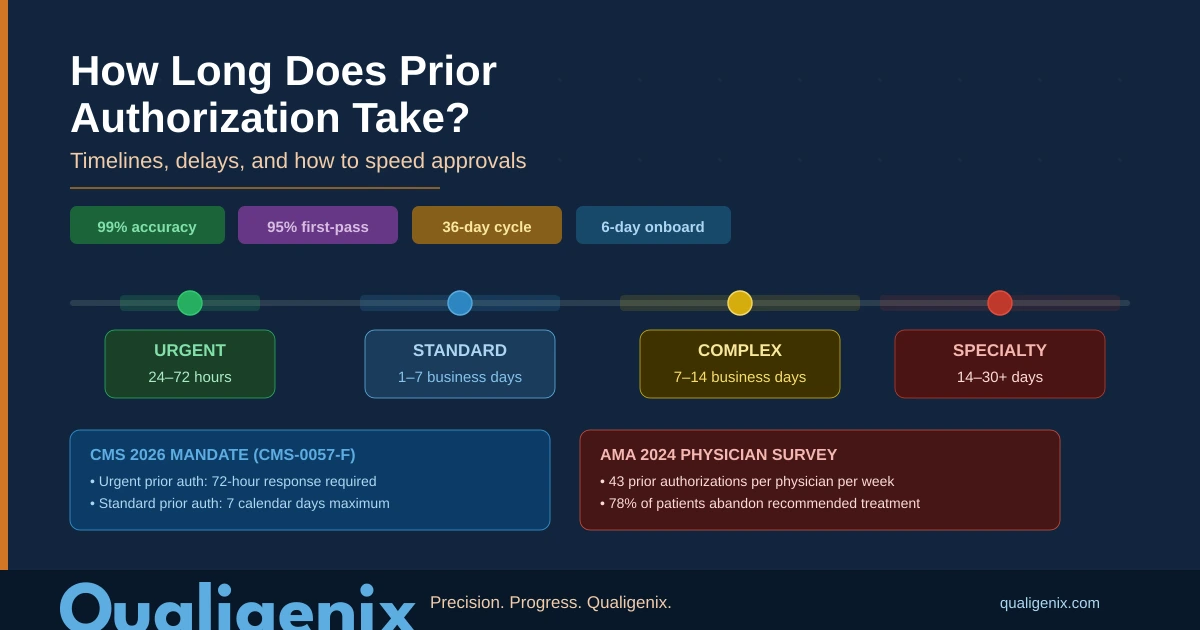
How Long Does Prior Authorization Take? Timelines, Delays, and How to Speed Approvals
How Long Does Prior Authorization Take? Timelines, Delays, and How to Speed Approvals Summary How long does prior authorization...
Charge Capture in Healthcare: Common Errors & How to Fix Them
Is your healthcare organization losing thousands of dollars before claims even leave your system? Amidst shrinking margins and intense...