
Top Revenue Cycle Management Companies in the USA for Medical Practices
The Qualigenix Editorial Team comprises certified medical billing professionals, CPC-credentialed coders, prior authorization specialists, and revenue cycle consultants with more than 40 years of combined hands-on experience serving solo physicians, group practices, hospitals, and ASCs across 38+ specialties in the United States. Every guide, article, and resource published on the Qualigenix blog is researched against current CMS guidelines, Federal Register notices, AMA policy updates, and payer-specific billing rules — and reviewed for compliance accuracy before publication. Our content reflects the same standards we apply to our client work: 99% claim accuracy, 95% first-pass acceptance, and a 30% average reduction in AR days.

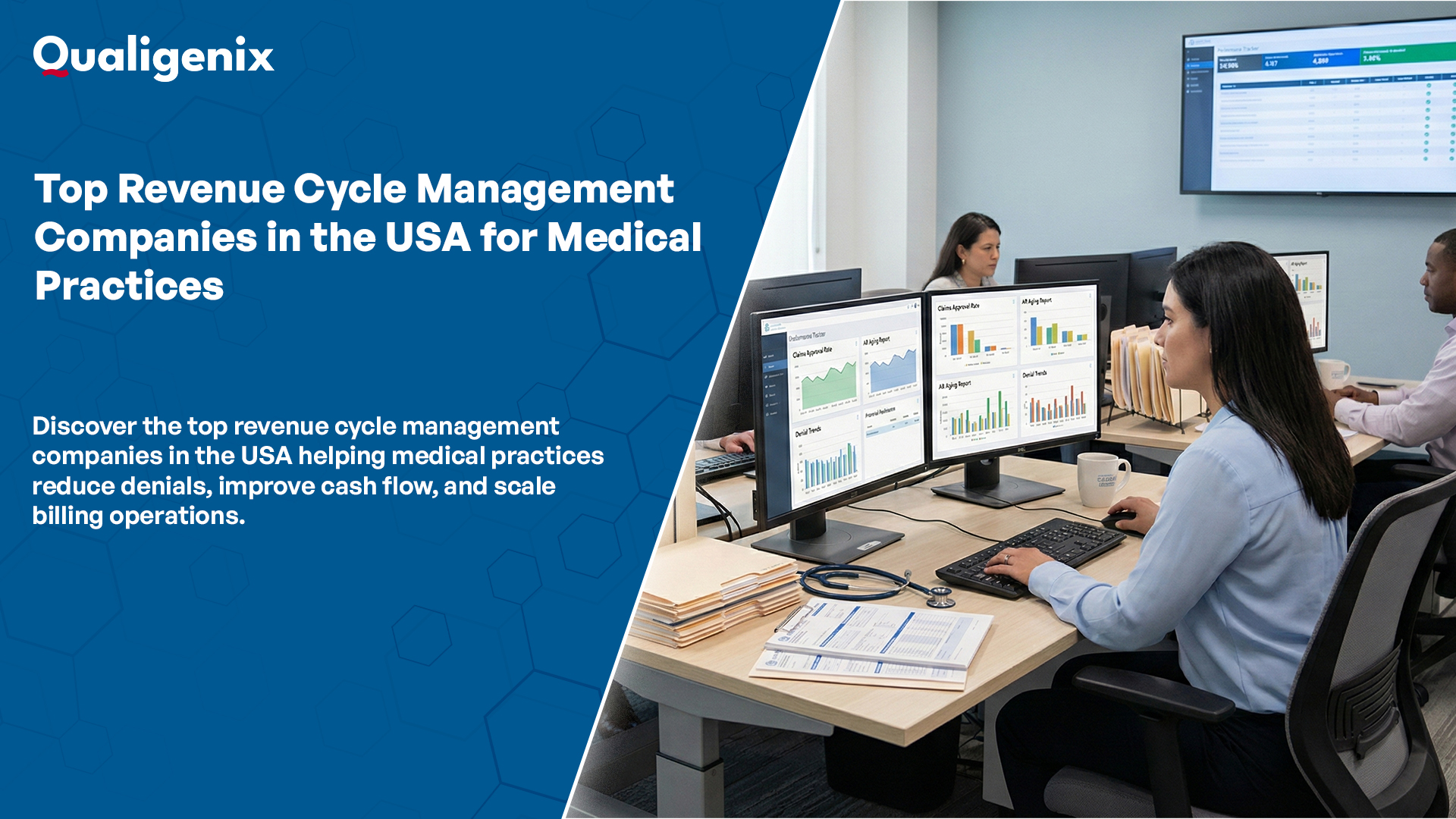
The financial health of medical practices in the United States faces unprecedented pressure as we move further into 2026. Providers deal with strict payer scrutiny and a growing shortage of skilled administrative staff. These hurdles make it difficult to maintain a steady flow of revenue while focusing on patient care. Many clinics now turn to revenue cycle management companies to bridge the gap between clinical excellence and financial stability.
This guide explores how these partners transform billing operations and helps you identify the best fit for your facility. We will analyze the core services, evaluation criteria, and the top-performing firms currently leading the industry.
What Do Revenue Cycle Management Companies Do?
RCM companies in the USA function as the financial engine for healthcare organizations. They take over the complex administrative work required to get paid. This process begins before the patient sees the doctor. It continues long after the patient leaves the clinic.
Specialized partners handle every step of the medical billing lifecycle to ensure accuracy. They navigate the labyrinth of payer rules so providers can focus on clinical care. Here are the core services offered by revenue cycle management companies:
- Eligibility Verification: Staff confirm insurance coverage and benefits prior to the appointment.
- Medical Coding: Certified coders translate clinical documentation into billable alphanumeric codes.
- Claims Submission: Teams scrub claims for errors and transmit them to payers electronically.
- Accounts Receivable (AR) Follow-up: Specialists pursue unpaid claims and resolve bottlenecks.
- Denial Management: Experts investigate rejected claims and submit appeals to recover revenue.
- Reporting and Analytics: Leaders provide dashboards that show cash flow trends and performance metrics.
Why Medical Practices in the USA Outsource RCM?
Managing billing in-house is becoming increasingly difficult. The complexity of the US healthcare system demands specialized expertise. Many practices find that outsourcing offers several advantages.
Impact on Cash Flow and Collections
Specialized RCM companies in the USA operate with a singular focus on revenue. They deploy dedicated teams to work on claims every single day. This consistent effort accelerates the payment cycle significantly. Here’s how outsourcing RCM helps medical practices:
- Reduced the number of days claims sit in accounts receivable.
- Identification of underpayments that internal teams might miss.
- Implementation of rigorous follow-up processes for patient balances.
Compliance and Payer Rule Management
Regulatory environments change constantly. Payers update their coverage policies without warning. RCM companies invest heavily in training to stay ahead of these shifts, as they perform the following tasks:
- Maintain certification in HIPAA and other privacy laws.
- Update coding libraries to reflect the latest ICD-10 and CPT changes.
- Reduce the risk of audits by ensuring documentation supports the billed services.
How to Evaluate Revenue Cycle Management Companies?

Selecting a partner is a high-stakes decision. The wrong choice can disrupt cash flow for months. Buyers must look beyond the marketing pitch. You can evaluate revenue cycle management companies by considering the following factors:
Specialty and Payer Experience
Generalist medical billing companies often struggle with complex specialties. A practice needs a partner who understands its specific clinical nuance.
- Ask for case studies related to your specific medical field.
- Verify their track record with your top five insurance payers.
- Ensure they understand unique modifiers and billing rules for your procedures.
Technology and Reporting Transparency
Modern RCM requires modern software. You should never be in the dark about your money.
- Look for partners who offer real-time analytics dashboards.
- Ensure you have 24/7 access to view claim status.
- Demands detailed reports on denial reasons and recovery rates.
Pricing Models and Contract Terms
Transparency in cost is critical. The pricing structure should align its incentives with your success.
- The percentage of collections is the most common model.
- Flat monthly fees are available for some services.
- Clarify who owns the data if you decide to terminate the contract.
Top Revenue Cycle Management Companies in the USA for Medical Practices
The following list highlights the leading firms in the industry for 2026. We selected these revenue cycle management companies based on their market presence. We also considered their technology platforms and service breadth.
1. Qualigenix
Overview: We have rapidly emerged as a preferred partner for practices seeking high-touch service combined with aggressive denial management. Our team specializes in recovering aged accounts receivable that other firms write off. We emphasize “human-in-the-loop” AI to ensure accuracy without losing personal oversight.
Who We Serve: Mid-sized medical practices, specialty clinics, and ambulatory surgery centers.
Key RCM Services
- Forensic denial recovery and appeals.
- Comprehensive coding audits.
- Out-of-network negotiation and billing.
What Differentiates Us: Our “Zero-Balance” approach ensures every single claim is worked until resolution. We refuse to let small balances age out unnoticed.
2. R1 RCM
Overview: R1 RCM stands as a dominant force in the industry. They offer a technology-driven approach that aims to solve staffing shortages through automation. Their “Phare” platform integrates AI agents to handle repetitive tasks.
Who They Serve: They primarily target large health systems and physician groups.
Key RCM Services
- End-to-end revenue cycle outsourcing.
- Physician advisory services.
- Complex claims recovery.
What Differentiates Them: Their proprietary technology platform “Phare” uses autonomous agents to process claims at a massive scale.
3. Ensemble Health Partners
Overview: Ensemble focuses on “revenue cycle excellence” through a combination of people and technology. They consistently rank high in HFMA peer reviews. Their approach emphasizes deep operational partnership rather than just transactional billing.
Who They Serve: Hospitals and large integrated delivery networks.
Key RCM Services
- Full revenue cycle outsourcing.
- Denial prevention and management.
- Patient access services.
What Differentiates Them: Their EIQ technology platform provides exceptional visibility into performance metrics.
4. Optum (Change Healthcare)
Overview: Optum is a giant in the healthcare data space. They leverage massive datasets to drive efficiency. Their acquisition of Change Healthcare solidified their position as a leader in connectivity and claims processing.
Who They Serve: Providers of all sizes, from independent clinics to national networks.
Key RCM Services
- Claims clearinghouse services.
- Revenue integrity and audit defense.
- Advanced payment accuracy solutions.
What Differentiates Them The sheer volume of payer data they possess allows for unmatched predictive analytics.
5. Waystar
Overview: Waystar delivers a cloud-based platform known for its user-friendly design. They focus heavily on using AI to predict and prevent denials. Their software simplifies the complex interaction between providers and payers.
Who They Serve: Health systems and ambulatory practices.
Key RCM Services
- Automated claim monitoring.
- Denial and appeal management.
- Patient payment estimation tools.
What Differentiates Them: Their “ClaimAI” and “DenialAI” solutions automate the correction of claims before submission.
6. athenahealth
Overview: athenahealth combines software with network-enabled services. They are unique because they crowd-source payer rules from their entire network. If one user faces a denial, the system updates the rule for everyone.
Who They Serve: Independent medical practices and small to mid-sized groups.
Key RCM Services
- Integrated EHR and billing services.
- Patient engagement and portal tools.
- Co-sourcing billing support.
What Differentiates Them: Their “gamified” workflows for billing staff drive higher productivity and engagement.
7. GeBBS Healthcare Solutions
Overview: GeBBS is known for its robust denial management capabilities. They use a proprietary workflow tool called iCode. Their focus is on helping providers reduce revenue leakage through better coding accuracy.
Who They Serve: Hospitals and large billing companies.
Key RCM Services
- Risk adjustment coding.
- Credit balance resolution.
- Extended business office services.
What Differentiates Them: Their “iAR” tool streamlines the workflow for working denials and following up on unpaid claims.
8. Omega Healthcare
Overview: Omega Healthcare provides outcome-based solutions. They utilize a large workforce to handle high volumes of transactions. Their methodology focuses on accuracy and speed to improve net collections.
Who They Serve: Healthcare providers and payer organizations.
Key RCM Services
- Medical coding audits.
- Revenue integrity services.
- Clinical documentation improvement.
What Differentiates Them: Their “Omega Digital Platform” integrates automation with deep clinical expertise.
Common Mistakes Practices Make When Choosing RCM Companies
Providers often rush the selection process. This haste leads to mismatched expectations. Avoiding these pitfalls is important for a successful partnership.
- Focusing Only on Cost: The cheapest vendor often collects the least amount of money.
- Ignoring Reporting Access: You cannot manage what you cannot see.
- Choosing Generalists: A vendor without specialty expertise will struggle with your specific coding nuances.
How Qualigenix Helps as a Revenue Cycle Management Partner

Qualigenix acts as a comprehensive ally for medical practices navigating the US healthcare system. We understand that every dollar counts. Our team delivers end-to-end healthcare RCM services that go beyond simple data entry. Here’s why you should partner with us:
Proactive Denial Prevention
We believe the best way to manage a denial is to prevent it entirely. Our technology scrubs every claim against thousands of payer-specific rules before transmission. This pre-submission rigor catches errors early. It ensures that clean claims reach the insurance company the first time.
Aggressive AR Optimization
Aged receivables often turn into bad debt if left unattended. We refuse to let revenue stagnate. Our specialists execute rigorous follow-up protocols on every unpaid balance. We hold insurance companies accountable for every day of delay. This persistence transforms dormant accounts into liquid capital.
Compliance-Focused Workflows
Regulatory scrutiny is intensifying across the sector. We embed compliance safety checks into every workflow. Our certified experts monitor documentation to mitigate audit risks. We protect your practice from penalties while maximizing your reimbursement.
Specialty-Specific Customization
Generic solutions rarely work in healthcare. We calibrate our methodology to fit the unique nuances of your specialty. We align our coding and billing strategies with your specific clinical focus. This tailored approach ensures you capture the full value of the care you provide.
Choose The Right Partner to Turn Liabilities into Liquid Assets!
The decision to partner with one of the leading revenue cycle management companies is a strategic investment in the future of your medical practice. As payer rules grow more complex, having a dedicated expert on your side becomes a necessity rather than a luxury. The right partner will ensure that your revenue flows steadily so that you can remain focused on your clinical mission. You should prioritize a company that offers transparency and specialty-specific expertise. This choice will protect your practice from financial stress and allow you to thrive in the years to come.
FAQs
1. What are revenue cycle management companies?
You can consider these firms as your outside finance department. They handle everything, from making sure patients are eligible to collecting final payments. This way, your business gets paid for all the services it provides.
2. How much do RCM companies charge?
A contingency plan is used by most vendors. Most of the time, they charge between 3% and 7% of your cash collections. This structure makes sure that their financial incentives are exactly aligned with your ability to get reimbursed.
3. Are RCM companies suitable for small practices?
Yes, they are highly effective for smaller clinics. Outsourcing grants access to enterprise-grade technology and expertise without overhead costs. This model scales easily as your patient volume grows.
4. What metrics should practices track with RCM partners?
Keep an eye on Days in Accounts Receivable to see how fast people are paying you. Track the Net Collection Rate to see how well things are working, and look at the rejection rates to see if the same mistakes keep happening.
5. Can RCM companies reduce claim denials?
They significantly lower rejection rates. These firms employ certified coders and automated scrubbing tools to catch errors before submission. This proactive strategy prevents revenue leakage at the source.
6. Is outsourcing RCM better than in-house billing
Outsourcing is usually better for practices that are having trouble with staffing or understanding complicated provider rules. It gets rid of all routine tasks. You take care of patients while experts keep your cash flow stable.
What’s Next
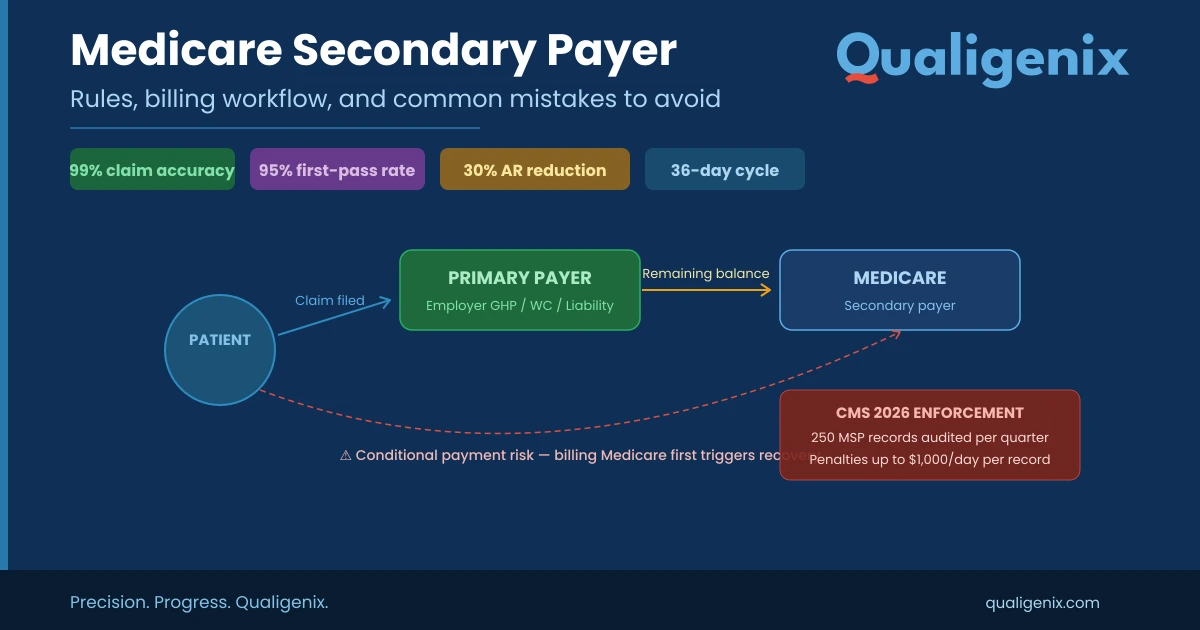
Medicare Secondary Payer: Rules, Billing Workflow, and Common Mistakes to Avoid
Summary Medicare secondary payer (MSP) rules determine which insurer pays first when a Medicare beneficiary has other coverage. Providers...

How Long Does Prior Authorization Take? Timelines, Delays, and How to Speed Approvals
How Long Does Prior Authorization Take? Timelines, Delays, and How to Speed Approvals Summary How long does prior authorization...
Charge Capture in Healthcare: Common Errors & How to Fix Them
Is your healthcare organization losing thousands of dollars before claims even leave your system? Amidst shrinking margins and intense...