
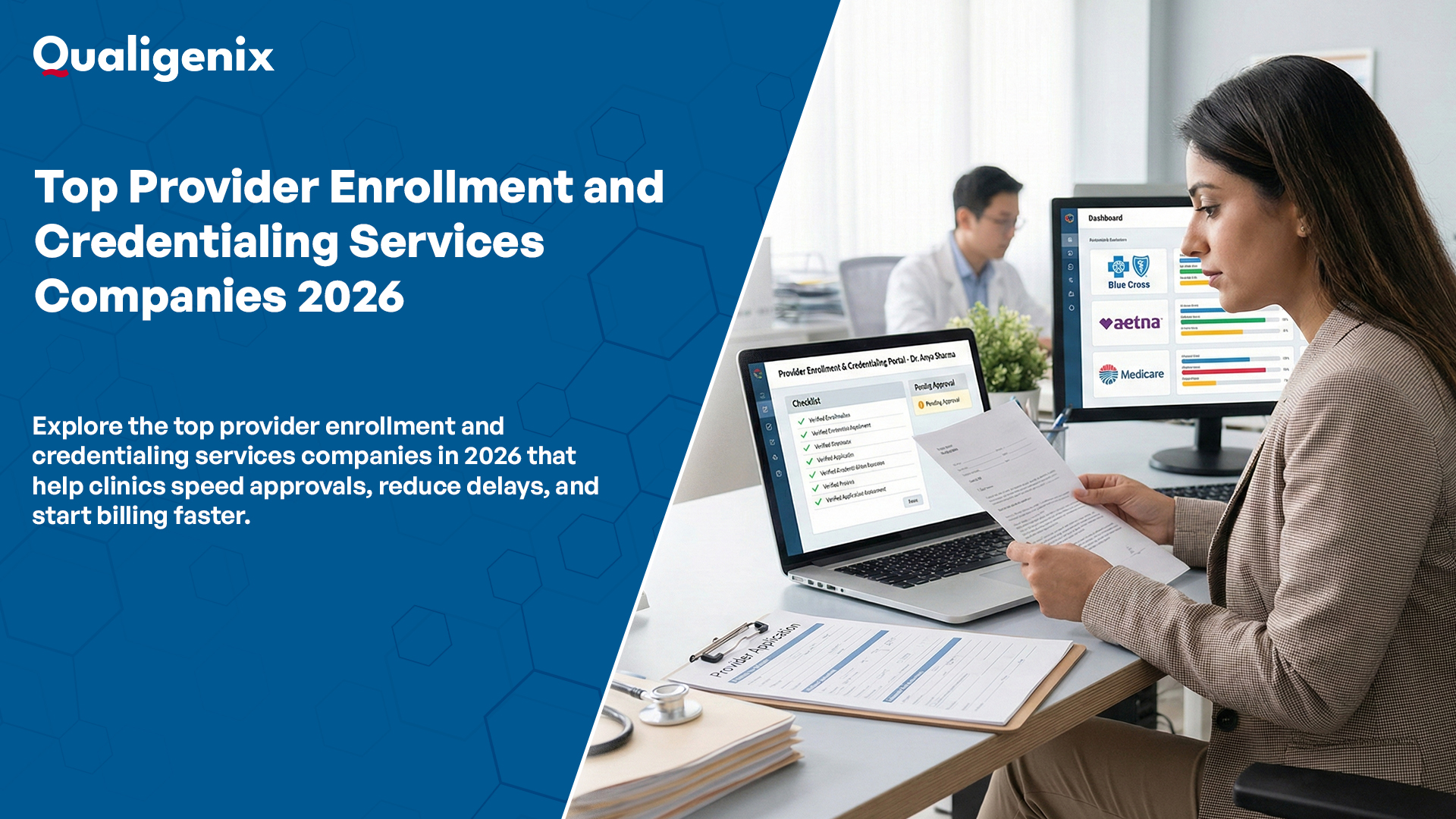
Top Provider Enrollment and Credentialing Services Companies (2026)
The Qualigenix Editorial Team comprises certified medical billing professionals, CPC-credentialed coders, prior authorization specialists, and revenue cycle consultants with more than 40 years of combined hands-on experience serving solo physicians, group practices, hospitals, and ASCs across 38+ specialties in the United States. Every guide, article, and resource published on the Qualigenix blog is researched against current CMS guidelines, Federal Register notices, AMA policy updates, and payer-specific billing rules — and reviewed for compliance accuracy before publication. Our content reflects the same standards we apply to our client work: 99% claim accuracy, 95% first-pass acceptance, and a 30% average reduction in AR days.

How long can your practice afford to wait before new providers start generating revenue? Credentialing timelines now average 90-120 days, with some specialties facing a waiting period that exceeds 6 months. This occurs because payer requirements grow more complex each year. The demands for documentation multiply, making providers unable to bill and freezing their revenue growth. In fact, insurance networks now require an average of 20 separate documents per application. These credentialing delays cost healthcare providers over $1 million annually in lost revenue. This is where provider enrollment and credentialing services make a difference. These specialized companies navigate payer requirements, manage documentation, and accelerate approvals. But which services deliver the best results for your practice? Read on to find out!
What Are Provider Enrollment and Credentialing Services?
Provider enrollment and credentialing services are specialized solutions that handle the complex process of getting healthcare providers approved to practice and bill insurance companies. Credentialing verifies your professional qualifications. It includes confirming medical licenses, board certifications, education credentials, work history, and malpractice insurance. The process also involves background checks and peer references to ensure there are no disciplinary actions against you.
Enrollment takes those verified credentials and submits them to insurance payers. It gets you into their networks so you can bill for your services. But the process doesn’t stop after initial approval. Provider enrollment and credentialing services also manage ongoing maintenance. These services track every deadline, including license expiration, update payer databases, and keep everything synchronized. This way, they ensure your information stays current across all networks to keep your revenue flowing.
How Credentialing and Payer Enrollment Work Together?
Credentialing verifies your qualifications. Enrollment activates your ability to bill. Both must be completed and synchronized to process the claims. Here’s why you need both:
- Credentialing Alone Doesn’t Grant Billing Rights: You might have perfect credentials, including valid licenses, current certifications, and clean background checks. But if you are not enrolled in a payer’s system, your claims get rejected. The insurance company acknowledges you’re qualified, but you’re not in their billing database.
- Enrollment Without Credentialing Creates Delays: Payers won’t process enrollment until you complete the credentialing verification. If there’s a discrepancy, such as if your Council for Affordable Quality Healthcare (CAQH) profile shows a different name spelling than your state license, the application will not be processed.
- Sequential Processing Costs Time: Starting credentialing without planning for enrollment will cost you time and resources. The processes must run in parallel to reduce time-to-billing.
Why Clinics Outsource Payer Enrollment and Credentialing?

The process of credentialing and enrolling in-house may seem affordable until you factor in the hidden costs. Here’s why clinics are increasingly turning to professional provider enrollment and credentialing services:
- Delays in Approval Mean Lost Revenue: Each week that a provider’s claim is not approved is a lost opportunity to earn revenue. Getting approved faster means that providers can start earning revenue sooner.
- Administrative Tasks Overwhelm Staff: Credentialing involves monitoring hundreds of deadlines on different payer websites. It could overwhelm your internal staff, who are already juggling other responsibilities such as scheduling, billing, and operations.
- Mistakes in Applications Lead to Rejections: Even a single misplaced document or a simple misspelled name will make you restart the whole process once again. In-house credentialing will have mistakes that professional services avoid, saving your timelines.
Impact on Revenue Cycle and Billing Readiness
Early enrollment allows for early claim filing and immediate funds. Here’s how provider credentialing and enrollment services affect your revenue cycle and billing readiness:
- Lost Revenue due to Claim Rejections: Credentialing mistakes, such as NPI number errors or discrepancies, cause claim rejection. Professional provider enrollment and credentialing services help avoid rejections due to inaccuracies.
- Early Cash Flow and Revenue Receipt: Provider enrollment and credentialing services can cut the credentialing process from 120 days to 60 days. It may also result in additional revenue and early income.
- Shorter Days in Accounts Receivable: Proper enrollment helps avoid claim rejections, which in turn accelerates cash flow. Eventually, it will help shorten the time between service delivery and cash receipt.
- Financial Planning: Regular enrollment cycles help you plan your revenue. In this manner, you can plan for your future operations.
Top Provider Enrollment and Credentialing Services Companies 2026
To help you out, we have compiled the list of the strongest provider enrollment and credentialing services options for 2026. Our selection criteria included payer network breadth, technology platforms, client results, and industry reputation. Let’s take a look at them below:
Qualigenix provides comprehensive medical credentialing solutions exclusively for emerging healthcare practices that require quicker enrollment and fewer denials.
Who it serves: Group practices, multi-specialty practices, ambulatory surgery centers, urgent care centers, and new healthcare startups expanding their staff of providers.
Core enrollment and credentialing capabilities:
- Full credentialing file management from application to approval
- CAQH profile development, verification, and ongoing maintenance
- Enrollment with Medicare, Medicaid, and commercial payers on all networks
- Document validation and accuracy verification prior to submission
- Active payer contracting support, with weekly status updates and escalation
What sets us apart: At Qualigenix, we integrate credentialing with your revenue cycle operations. This way, we will alert your billing staff the instant enrollment is complete and provide all necessary payer details for immediate claims filing. Additionally, you will have access to our specialized credentialing professionals who minimize enrollment-related denials with comprehensive pre-submission validation.
MD Staff specializes in physician and mid-level credentialing for practices of all sizes, from solo physicians to large health systems.
Who it serves: Primary care clinics, specialty practices, urgent care centers, and multi-location medical groups.
Core enrollment and credentialing features:
- Complete credentialing file management with dedicated support teams
- Primary source verification for licenses, certifications, and education
- CAQH profile management and quarterly attestation
- Medicare and Medicaid enrollment across all states
- Commercial payer applications with expedited processing
What sets it apart: MD Staff has both credentialing expertise and practice management consulting. In addition, their client support team includes former payer enrollment staff who know how to handle payer bureaucracies.
CredentialMyDoc offers cloud-based credentialing and enrollment with strong automation features that reduce your manual work.
Who it serves: Growing practices, telehealth providers, behavioral health groups, and healthcare startups needing fast market entry.
Core enrollment and credentialing features:
- Automated document collection with provider self-service portals
- Electronic signature workflows that eliminate paper processes
- Real-time application tracking with status dashboards
- Payer relationship management and direct communication channels
- Re-credentialing alerts with 90-day advance notifications
What sets it apart: As the best provider credentialing companies, their technology platform allows you to upload documents once and use them across multiple payer applications. Moreover, the system pre-fills forms automatically, which will reduce errors as well as save your time compared to traditional methods.
Verisys provides enterprise-level credentialing solutions that include advanced verification capabilities and extensive database access.
Who it serves: Health plans, hospitals, large medical groups, and ACOs requiring high-volume credentialing.
Core enrollment and credentialing features:
- Continuous primary source verification with automated monitoring
- Sanctions screening across OIG, SAM, and state exclusion lists
- License monitoring with real-time expiration alerts
- Board certification verification directly from specialty boards
- DEA validation and controlled substance registration tracking
What sets it apart: Verisys maintains direct connections to primary sources, including state licensing boards. This way, you can overcome common verification delays that come with manual processes. Their continuous monitoring catches your license expirations and sanctions in real-time.
MedCreds focuses on payer enrollment and credentialing for small to mid-sized practices, offering you personalized service with dedicated account managers.
Who it serves: Independent practices, small group practices, and providers entering new markets.
Core enrollment and credentialing features:
- Initial credentialing with comprehensive document preparation
- Re-credentialing management on 36-month cycles
- CAQH attestation services with accuracy verification
- Payer enrollment for commercial, Medicare, and Medicaid plans
- Provider database updates across all major insurance network enrolment
What sets it apart: You will get a dedicated credentialing timelines specialist who manages your entire portfolio. With this single point of contact model, there will be no confusion, and you will receive consistent follow-through. MedCreds also offers payment plans that help cash-constrained startups.
Modio Health delivers technology-enabled credentialing and network management for healthcare organizations at scale.
Who it serves: Health systems, large medical groups, and organizations managing hundreds of providers across multiple locations.
Core enrollment and credentialing features:
- Enterprise credentialing platform for multi-provider organizations
- Bulk enrollment processing across multiple tax IDs and locations
- Provider directory management with accuracy and compliance
- Network participation optimization and gap analysis
- Analytics dashboards with enrollment metrics
What sets it apart: Modio’s platform handles your complex organizational structures smoothly. They manage credentialing for your provider onboarding, even across multiple tax IDs, locations, and specialties simultaneously. Their analytics identify challenges for healthcare enrollment vendors and suggest process improvements.
Symplr offers workforce provider enrollment and credentialing services that focus on maintaining hospital privileging and ongoing compliance.
Who it serves: Hospitals, ambulatory surgery centers, and integrated delivery networks.
Core enrollment and credentialing features:
- Medical staff credentialing for hospital privileging
- Payer enrollment with unified data management
- Privileging and re-privileging workflow automation
- Expirables tracking for licenses, certifications, and insurance
- Sanction screening with monthly monitoring updates
What sets it apart: Symplr’s platform unifies your credentialing across multiple contexts, such as payers, hospitals, and regulatory bodies. With one credentialing file, you can reduce redundant data collection and ensure consistency across all your enrollment types.
Medallion has a modern, API-enabled credentialing infrastructure designed for digital health companies and innovative healthcare delivery models.
Who it serves: Telehealth platforms, virtual care providers, digital health startups, and technology-enabled practices.
Core enrollment and credentialing features:
- Digital credentialing workflows with automated verification
- Multi-state licensure support for telehealth compliance
- Telehealth payer enrollment across all major platforms
- API integrations with practice management and EHR systems
- Lifecycle management from provider onboarding through offboarding
What sets it apart: Medallion built its platform to fit the needs of modern healthcare delivery. They handle the challenges of multi-state telehealth credentialing better than legacy providers. Their API allows seamless integration with your electronic health records and scheduling systems.
How Does Payer Enrollment and Credentialing Affect Claim Approvals?

Getting credentialed ensures that all claims you file are paid quickly and accurately. The quality of your enrollment affects the smooth processing of your claims. Here’s how both affect your claim approvals:
In-Network Status Prevents Automatic Rejections
If providers are not credentialed with a payer’s network, claims are automatically rejected. If your provider ID or NPI number is not recognized as active and in-network by the payer’s system, the claim will be rejected and returned unpaid. This may hold up your income for 30-60 days.
Accurate Provider Information Enables Clean Claims
Clean claims require accurate information. Your information must be identical in CAQH, state licensing authorities, and every payer’s system. Misspelled names, outdated addresses, incorrect NPI numbers, or different specialties will cause claim holds or rejections.
Current Credentials Ensure No Payment Delays
Payers are always checking if the enrolled providers have active credentials. If your license has expired, it will result in the automatic denial of your claims. You have to ensure that your certification and license are up to date to avoid such interruptions and ensure smooth processing of your claims.
Correct Enrollment Ensures Faster Reimbursement Speed
Claims from providers with complete and accurate information will be processed quickly. There will be no verification delays or manual processing required because of information discrepancies. This means that you will receive your reimbursements within 14-21 days, ensuring timely cash flow.
Lower Denial Rates Save Administrative Expenses
With every denied claim, you have to invest your time in investigating, correcting, and resubmitting the claim. High denial rates due to enrollment problems can impact the billing department’s operations. Provider enrollment and credentialing services ensure accurate information, which will reduce your denial rates, allowing your staff to engage in productive work.
How Qualigenix Helps With Provider Enrollment and Credentialing Services
Qualigenix takes care of your provider enrollment and credentialing services, handling every step of verification and maintenance. We make sure your providers get revenue flow faster and avoid the provider enrollment mistakes that lead to claim rejections and revenue delays. Here’s how we are different:
- Create, update, and manage CAQH profiles with accurate data while keeping information consistent across all payer systems.
- Submit enrollment applications to major payers and actively track progress to reduce standard processing timelines from 120 days to about 60–75 days.
- Validate licenses, certifications, insurance documents, and provider identifiers before submission to prevent rejections and resubmission delays.
- Monitor application status daily and respond quickly to payer verification requests to avoid stalled or closed applications.
- Confirm provider activation in billing systems and verify effective dates so claims can be submitted without delays.
- Track renewals, expirations, and re-credentialing cycles to prevent credential gaps that interrupt billing and cash flow.
Want Faster Credentialing? Partner with Qualigenix!
Provider enrollment and credentialing services have come a long way from being mere administrative tasks. Now, they act as revenue strategies that directly impact your practice’s financial performance and growth. The right partner can help you cut down on approval cycles, expand payer network access, and get your providers’ billing faster than in-house teams can manage alone.
Ready to say goodbye to delays and hello to faster revenue? Partner with Qualigenix today!
FAQs
1. What are provider enrollment and credentialing services?
Provider enrolment and credentialing services verify provider qualifications and enroll them with insurance payers. They handle license verification, education confirmation, background checks, and application submissions.
2. How long does payer enrollment usually take?
In general, enrollment takes 90-120 days. However, the processing speed varies based on application completeness, specialty type, state requirements, and payer workload.
3. Why do providers get stuck in credentialing?
Most providers get stuck in credentialing due to the following reasons:
- Incomplete applications and missing documentation
- Expired certifications or outdated licenses
- Work history gaps without a proper explanation
- Unreturned verification requests from previous employers or hospitals
- Discrepancies between credentialing forms and primary source recordsIs CAQH required for enrollment?
CAQH isn’t universally mandatory. But most commercial payers require this centralized database to store provider information and streamline credentialing. Therefore, you need to keep your CAQH profile current to speed up enrollment with multiple payers simultaneously.
4. Can clinics handle enrollment in-house?
Yes, but it can be challenging to handle the excessive resources. Multi-provider groups, especially those expanding across states, or practices should seek outsourcing. These professional services offer expertise and faster processing.
5. How do these services reduce claim denials?
Accurate enrollment matches provider information across payer systems to prevent denials from incorrect NPI numbers, mismatched names, inactive credentials, or missing authorizations.
What’s Next
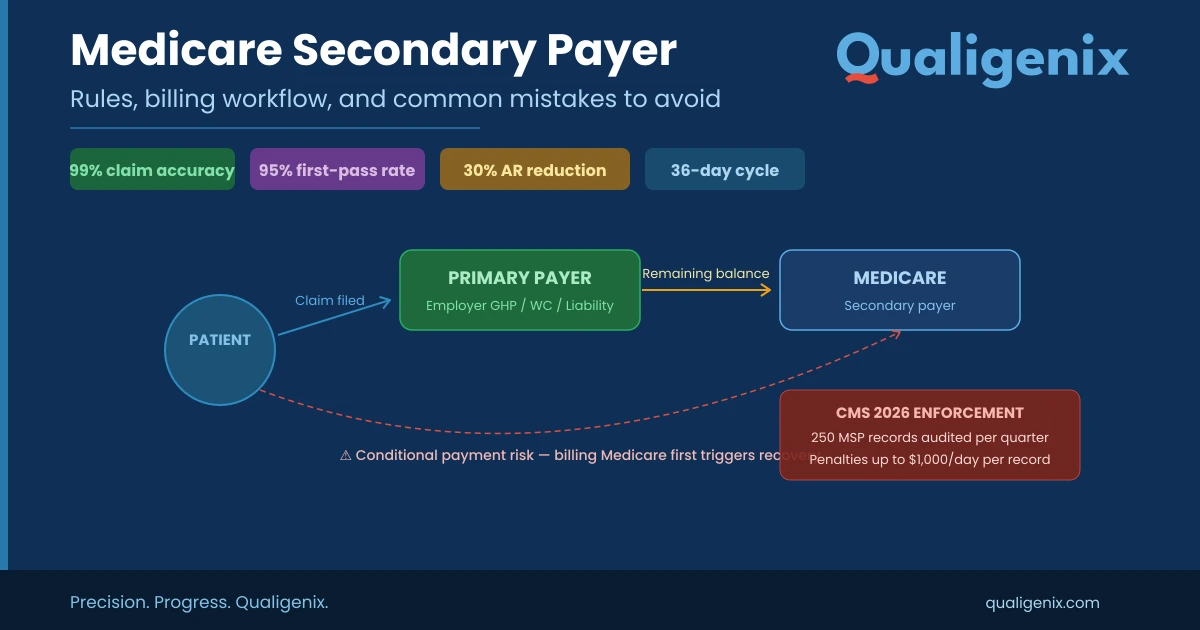
Medicare Secondary Payer: Rules, Billing Workflow, and Common Mistakes to Avoid
Summary Medicare secondary payer (MSP) rules determine which insurer pays first when a Medicare beneficiary has other coverage. Providers...
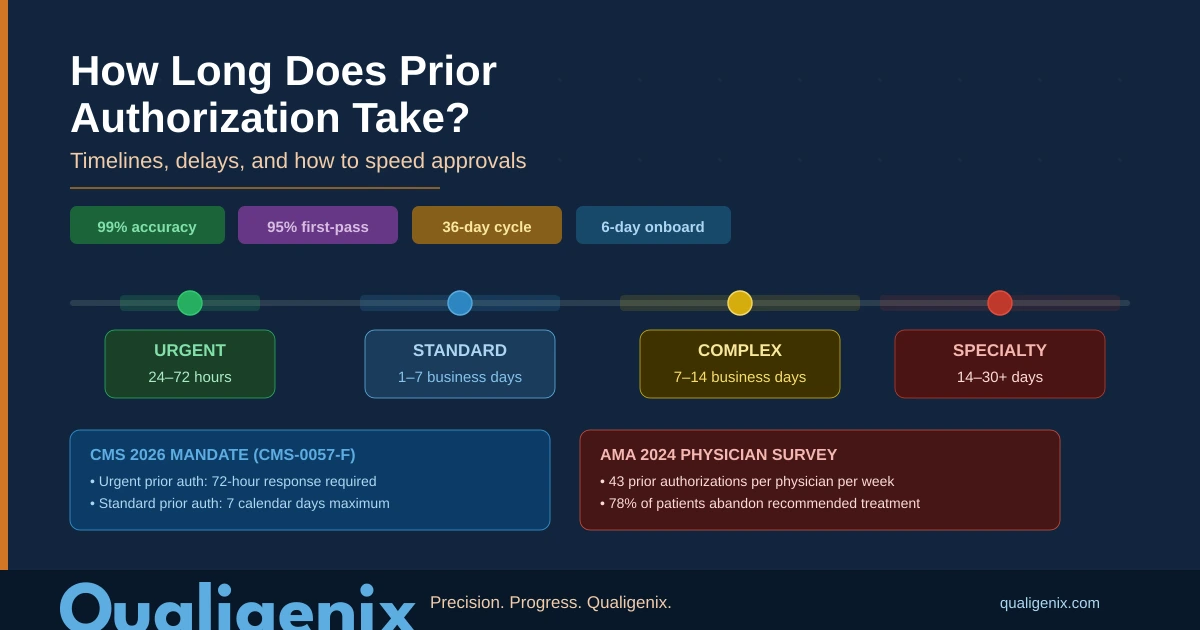
How Long Does Prior Authorization Take? Timelines, Delays, and How to Speed Approvals
How Long Does Prior Authorization Take? Timelines, Delays, and How to Speed Approvals Summary How long does prior authorization...
Charge Capture in Healthcare: Common Errors & How to Fix Them
Is your healthcare organization losing thousands of dollars before claims even leave your system? Amidst shrinking margins and intense...